



Diyas vs Candles: What's Actually Best for Your Diwali Decor?
 Share
Share
Diwali has always been defined by the diya. The soft aroma of clay diyas soaked in water when burnt in ghee or oil fills the house with a familiar smell that is nostalgic and reminiscent of Deepawali.
As the times changed, traditional diyas were paired with candles to elevate the Diwali décor. But which one is best suited to you? Or can they create the same magic individually? We explore these questions below, so your Diwali decoration ideas remain one-of-a-kind.
The cultural significance of diyas during Diwali

There are deep meanings and significance associated with diyas in our culture. Diwali, also called Deepawali, means a row of lamps. Hence, it is a way of celebrating, carrying deep spiritual, mythological and philosophical meaning. When Lord Rama came back to Ayodhya, the citizens lit diyas to welcome him. Since Goddess Lakshmi is worshipped on this occasion, lighting diyas around entrances is believed to guide Goddess Lakshmi into our homes.
A lit diya can dispel darkness, with its flame representing the light of knowledge that keeps ignorance away. The act of lighting diyas also brings people together.
The diya represents a composition of the self. The clay body is considered equivalent to the human body. The oil or ghee represents internal desire, ego and vasanas, or negative tendencies. The cotton wick represents the soul, or atma.
As the oil burns through the wick, it symbolises the burning of ego and self-interest, leaving behind pure, illuminated consciousness.
What makes candles different from traditional diyas?
Diyas light up spaces, but, so do candles, so how are they different from each other? They are different in spiritual symbolism, physical composition, ritual roles and environmental impact.
Traditional diyas are made of clay, while candles are made of paraffin, soy or beeswax. On the other hand, mustard oil, sesame oil or ghee are used in diyas, while wax is burned in candles.
Clay diyas are used for worship and spiritual rituals. On the other hand, candles are mostly used for decorative or ambient lighting. When it comes to flame quality, a diya exudes a warm, golden glow that is fed by the oil, while a candle has a uniform flame that is fuelled by a pool of melted wax.
Diyas generate biodegradable waste and leave little to no synthetic residue. On the contrary, the environmental impact of candles can drastically vary. They can generate wax waste after burning.
Diyas vs Candles: Appearance, Usability and Ambience

Now, when you know both candles and diyas are fundamentally different, yet they provide illumination, how should they be used for different occasions? Let’s compare them on various parameters.
|
Features |
Traditional Clay Diyas |
Candles (Pillar/Jar/Tea Light) |
|
Appearance |
Earthy and grounded. |
Sleek, modern and structured. |
|
Flame & Light |
Bright, warm, golden flame. Flickers with air currents. |
Soft, steady and uniform flame above the wax pool or contained by glass surroundings. |
|
Usability and Maintenance |
Requires arranging the wick and adding oil. It may also splatter if not handled with care. |
Ready to use instantly; self-contained. Melted wax can be collected in jars or votives. |
|
Burn Time |
Long burn time; can be refilled and reused for longer-lasting illumination. |
Used as individual units and replaced once completely exhausted. |
|
Aroma & Scent |
Natural, earthy aroma depending on the fuel used. |
Customisable scent; essential oils or other fragrances like vanilla, lavender or citrus are used. |
|
Ambience |
Evokes cultural nostalgia. |
Creates a relaxing atmosphere. |
How to combine diyas and candles in modern décor?
Both candles and diyas play significant roles in spreading light in their surroundings. There are multiple ways through which you can style and arrange them on the festival of lights. Some of the best Diwali lighting ideas are mentioned below:
1. At entrances, tiered surfaces or staircases
· Fill a marble urli bowl with water & flower petals and accompany it with tea-light candles and floating clay diyas.
· Create a pillar of light with candles of different heights and surround it with small diyas in odd numbers.
2. At dining tables and console vignettes
· Tall taper candles can be easily used to create flames at multiple heights.
· As the light spreads vertically, use handpainted diyas or glass diyas to add a sense of visual horizontality. These simple arrangements can become beautiful Diwali home decoration elements.
3. Entryway Thresholds and Rangoli-Focused Points
· Placing diyas around geometric-styled rangolis fills empty spaces and contributes to ground-level illumination.
· Hurricane candles or lanterns can be used at the entrance to create an interplay of light and shadow.
4. Scent and Material Balance
· Placing scented candles or diyas at the entrance can enhance the atmosphere.
· Use unscented ones or ones filled with ghee or oil around the dining space, as it already has the smell of food.
Terracotta vs Gaudeep Diyas
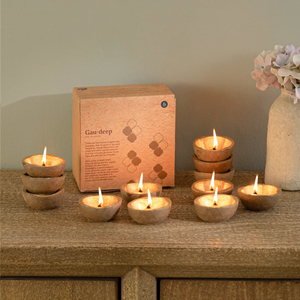
Clay or terracotta diyas have always been a part of Indian households. However, as we move towards a more sustainable lifestyle, Gaudeep diyas have emerged as a green alternative.
They are a traditional interpretation of the diya, made from natural, combustible material. The following table can help you understand the difference between the two.
|
Features |
Terracotta Diyas |
Gaudeep Diyas |
|
Material |
Fired clay, also called terracotta. |
Made from cow waste and hand-painted with natural paints. |
|
Appearance |
Earthen, rustic and simple. |
Organic, with natural textures, and most often handmade. |
|
Craft Tradition |
Pottery and clay craft. |
Rooted in traditional natural-material practices. |
|
Diwali Appeal |
Classic and versatile. |
More distinctive and rooted in ritual and tradition. |
|
Best For |
Rangolis, diya clusters, table décor, etc. |
Traditional festive settings and conscious décor. |
Creating a balanced Diwali lighting arrangement

While celebrating the festival of light, there’s so much you can do to decorate your surroundings, creating depth and warmth at the same time. With the available options, you can include them in an aesthetic manner for a pleasing and cosy atmosphere. These combinations can bring together festive home décor and traditional Diwali elements beautifully.
Dividing the area into vertical planes can be helpful, such as eye level, floor level and ceiling or wall height.
· Starting from the top
The upper level can feature fairy lights or paper lanterns at entryways, balconies or window frames. Curtain fairy lights can add a sheer glow to the room. These Diwali lights can create a soft backdrop without overwhelming the space.
· Mid-level: Structure & Height
Around tables, shelves and consoles, the darker corners can be lit up with the help of an urli bowl, pillar candles as well as glass lanterns.
· At the ground level: Paths, Rangolis, and Thresholds
Illuminate the intricate designs of rangoli with the help of clay diyas. Light doorways, windowsills, balcony perimeters and outdoor steps with terracotta and cow-waste diyas for an overall display.
Whether you choose to buy a diya online or buy a candle online, combining the two thoughtfully can help create a layered, warm and welcoming festive setting.
FAQs
Are diyas better than candles for Diwali?
Diyas hold greater cultural and spiritual significance during Diwali, while candles are ideal for adding decorative and ambient lighting. Both can complement each other beautifully.
Can you use candles and diyas together?
Yes. Combining diyas and candles creates a layered lighting arrangement with warmth, depth and visual interest.
Which type of diya is best for Diwali?
Traditional clay or terracotta diyas are classic choices, while Gaudeep diyas offer a more distinctive, natural alternative.
What is a Gaudeep diya?
A Gaudeep diya is a traditional diya made from natural, combustible cow waste and often hand-painted with natural paints.
Are terracotta diyas good for Diwali decoration?
Yes. Terracotta diyas have an earthy, rustic appeal and work beautifully around rangolis, entrances, tables and other festive spaces.
How can I decorate my home with diyas?
Place diyas around entrances, rangolis, staircases, windowsills and dining tables. Mix different heights and arrangements to create depth and warmth.

