



-
out of stock
Knurl Terracotta Curd Setter(Small)
Regular price Rs. 1,050.00Regular price -
best sellerout of stock
Terracotta Curd Setter With Wooden Lid- Natural
Regular price Rs. 1,390.00Regular price -
10% offbest sellerout of stock
Terracotta Curd Setter With Wooden Lid- Small
Regular price Rs. 1,071.00Regular priceRs. 1,190.00Sale price Rs. 1,071.00Save Rs. 119.00
-
best sellerout of stock
Terracotta Curd Setter With Wooden Lid- Large
Regular price Rs. 2,290.00Regular price -

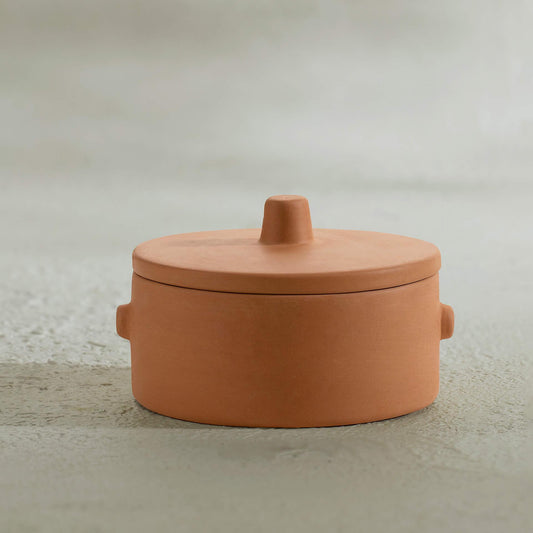

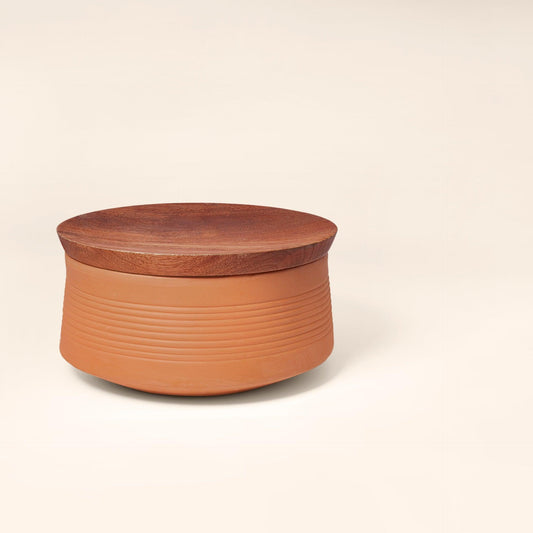

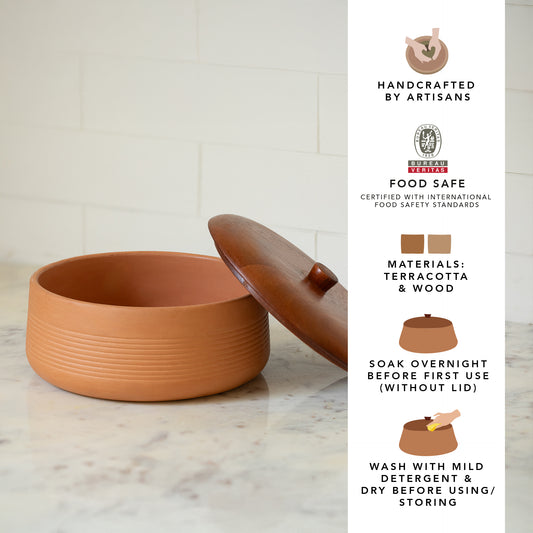

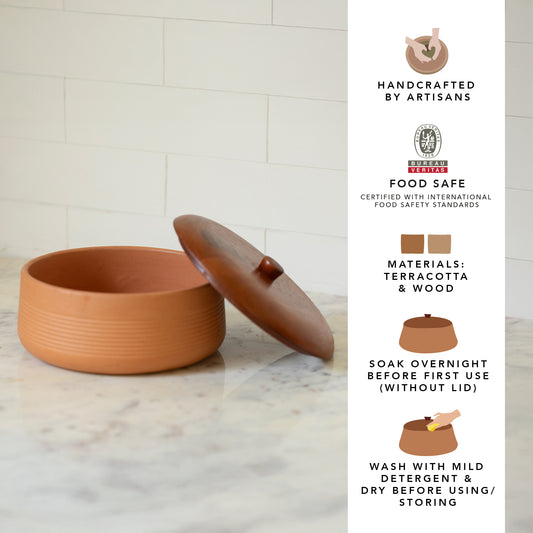


buy curd setter online
There is something very comforting about opening the lid of a newly set curd. The slight wobble. The mild, comforting aroma. The satisfaction of doing it just right.
The earthy smell of a clay curd setter is more than just a memory. It is the result of the combination of science and tradition. Warmth retained, culture allowed to develop, time passing quietly in the background. In Indian households, curd has been the cooling agent for hot summer afternoons and the comforter for heavy meals.
A well-designed curd setter can be part of this tradition, helping to develop the milk and continuing a process that results from both wisdom and care.
how to set perfect homemade curd every time
Making perfect homemade curd every time is no fluke. It is all about perfect temperature, patience and the right vessel. The following steps will help you make the perfect curd you desire.
step 1: start with a good milk
Try to use full-fat milk. It would give you creamier curd. Warm it well and let it sit for a while so that it cools down gradually. You should be able to dip your fingers without any discomfort. If the milk is too hot, the culture weakens, and if it is too cold, it won’t set.
step 2: add a fresh starter
Stir in a spoonful of fresh curd and blend gently. The culture becomes alive.
step 3: choose the right curd setter
Pour the milk into a clay or a terracotta curd setter. These elements ensure even distribution of warmth, creating the ideal environment for fermentation. Cover it lightly and let it rest undisturbed for 5 to 6 hours.
step 4: chill it further
Once ready, you can refrigerate it for 1 to 2 hours. This would firm up the curd and prevent further souring. Thus, preparing a bowl of thick, homemade curd that is simple, honest and made by your own two hands.
why traditional curd setters work better than plastic containers
Some practices are done only through the old ways. Curd Setting is one of them. In the modern world, you will find many types of curd setters. However, the clay and terracotta ones ensure that the heat is evenly distributed. It also remains stable for a long time. These natural materials also help retain warmth, allowing the culture to grow steadily and resulting in a well-set curd with balanced tang. Clay adds so much more than functionality to the process.
Breathability is what clay possesses. It absorbs excess moisture, allowing the curd to be set harder. Terracotta is non-reactive and has a smooth surface, making it very easy to clean. Both have a sense of being grounded, almost as if curd has been set this way in Indian households for generations. No wonder, it is the best container for setting curd at home.
It is not just a matter of nostalgia. It is science that has been incorporated into tradition. When warmth is allowed to be retained, milk is transformed in a beautiful manner. And the container, in its own subtle way, makes all the difference.
best materials for curd setting (clay, ceramic, steel)
The vessel you select is part of the fermentation process. It retains warmth, influences texture and subtly affects taste. Every material has its own character during the formation of curd.
clay curd setters
Clay is a traditional curd setter for ages. It has tiny pores that allow air flow while retaining warmth. This allows the milk to ferment evenly, resulting in creamier, thicker curd. It also absorbs excess moisture, which makes the curd consistent throughout. Since ages, it is considered the best curd setting container.
ceramic curd setters
Ceramic curd setters provide insulation without being porous. They retain heat well, which helps sustain steady fermentation. Ceramic is non-durable and easy to clean, making it hygienic.
Thoughtfully designed for convenience, they transition effortlessly from the kitchen shelf to the dining table, making them just as suitable for setting curd as they are for serving it.
steel containers
Stainless steel is strong, non-reactive, and low maintenance. It is a sensible choice for everyday use. It doesn’t retain heat as well as clay or terracotta, so the curd may take a little longer to set in a warmer corner of the kitchen.
Ultimately, the best curd setter for home depends on the material of your choice that should be in sync with your rhythm. It can be earthy, elegant, or just reliable. Because even simple curd starts with the right foundation.
temperature, timing & milk type — complete curd setting guide
Formation of curd should be the perfect amalgamation of time, patience and the right milk. When these three come together, the transformation feels effortless.
temperature
Milk should be lukewarm, equivalent to body temperature. If it’s too hot, it can weaken the process. On the other hand, if it’s too cold, fermentation slows. A simple test is to dip the finger and see if it is comfortable. If yes, then it’s ready.
timing
Curd typically sets in 5 to 6 hours in warm weather and 8 to 10 hours in cool weather. Try not to touch the vessel or move it during this process. Stillness in the solution, keep it firm and the texture even.
milk type
You may use different types of milk to set the curd. However, different milks would yield different consistencies or levels of richness. For instance, full-fat milk would yield thick, creamy curd. Toned milk results in a lighter consistency, while fresh-farm milk sets beautifully and has natural richness.
storing & serving curd hygienically
But once your curd is set to perfection, the attention continues with how you store and serve it.
• Store your curd in the refrigerator as soon as it is set. This will slow down the fermentation process and ensure that your curd has a balanced taste and a firm texture. Do not let it sit out for too long, especially if you are storing it in a warm environment, as this can make it too sour.
• It is essential that you use a clean and dry spoon to scoop your curd. This will prevent any moisture or food particles from affecting the freshness and cleanliness of your curd. If you are setting a fresh batch, do not mix it with the old curd in the same container.
• If your curd setter doubles as a serving bowl, bring it to the table just before the meal. This will ensure that it remains fresh. Using the same bowl extends the ritual from the kitchen to the table. So that it remains untouched, pure, and ready to be shared.
Because even the simplest bowl of curd requires attention.
FAQ's on Curd Setter
which material is best for setting curd at home?
how long does curd take to set in winter vs summer?
can curd be set in steel or ceramic containers?
why does homemade curd sometimes turn sour?
is homemade curd healthier than store-bought?
Popular Category
coffee mugs storage jarsmortar and pestletable lampchopping boardsculpturesplatesserving trayschakla belanroti boxbowlstumbler bottlecake stand
Gifts for Festivals
Rakhi GiftsDiwali GiftsChristmas GiftsNew year GiftsCorporate GiftsFriendship Day Gifts
Gifts for Special Occasions
Birthday GiftsAnniversary GiftsWedding giftsHousewarming GiftsFarewell Gifts

