



Navratri Thali Setup: Traditional Serveware for Your Fasting Menu
 Share
Share
As the seasons start taking a turn and a certain cold crispness starts mixing in the air, it becomes a gentle reminder of the arrival of the nine-day festival. A time for spiritual reflection, joyous celebration and mindful fasting. It is also the moment when the kitchen gets filled with the aroma of roasted peanuts, sizzling cumin and fresh ghee.
Apart from the special fasting meal, its presentation plays a significant role on this occasion. It is all about bridging customs with the art of hospitality. Choosing the right combination of serveware, hence, becomes pivotal for the entire fasting experience.
That is why, we have prepared a guide to help you pick the right elements, arrange them and style them for a flawless Navratri fasting experience. These Navratri thali ideas will help you create a beautiful and functional festive dining setup.
Essential pieces for a Navratri thali setup
A Navratri vrat is not an ordinary day. The whole objective is to keep you grounded and bring you closer to your spiritual values and beliefs. Some of these values include purity and sustainability. And what better way to celebrate it than with natural materials like brass, copper, wood and ceramic.
How can they come together to help you prepare an ideal Navratri dining space setup? Let’s find out. A base plate will be required that will be the heart of the arrangement. Made of brass, copper or ceramic, it can be 10–12 inches in diameter.
Since fasting involves multiple dishes such as sabudana khichdi, samak rice or kutti puri, all of these may require at least 3 to 4 bowls. These can match the aesthetic of the plate, or you can create a contrast. These pieces form the foundation of your Navratri dinnerware.
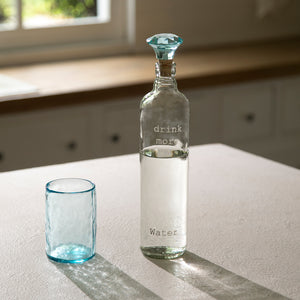
A small tumbler for lassi or one for water will also be required. Let it be made from clay or copper so it can provide your body the cooling effect it may require. Green chutney, rock salt and sweets like kheer or halwa will need a distinct space on the table. A tiny bowl for the first, a saltshaker and a ramekin will be required for the others.
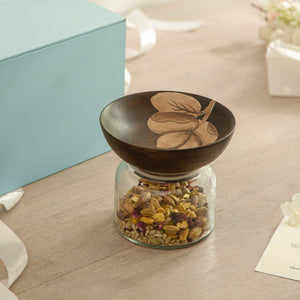
Apart from that, we cannot miss out on the occasional munchies. A bowl of makhana or dry fruits may also be needed. Finally, and most importantly, you will also require a pooja thali. This can include a central diya, roli or akshat along with marigold flowers or mango leaves.
Thus, both your vrat as well as pooja thali for Navratri are ready.
Choosing ceramic plates & bowls for fasting meals.
If your choice of serveware is ceramic, it will be the perfect amalgamation of ritual aesthetics and modern kitchen convenience. Non-porous or glazed ceramics do not absorb oil or flavours and are easier to maintain, hence making them the right choice.
But how would you know which ceramic plates and bowls would be the right ones to choose? Look out for the following characteristics.
1. Glaze and Purity: Check that the glaze is secure and crack-free, ensuring that no clay will be mixed with the food.
2. Microwave Safety: It is easier to reheat sabudana khichdi, so check if your chosen vessel is microwave-safe so you can enjoy a hot dish without cracking.
3. Avoid Metal Accents: Some ceramic serveware has metallic accents that make them unsafe for microwave.
4. Functional Spaces: Make sure you choose enough depth and width to contain loose grains and other ingredients.
Using wooden platters and serving boards.
Wooden platters and serving boards made of mango wood, acacia wood or arjun wood make for an ideal choice for the occasion of Navratri. They offer a rich, natural look and an appealing contrast against fasting meals like sabudana khichdi or fruit salads.
But before you pick a piece to include in your serveware and start using it, be aware of the following points.
· Check if the food-safe coating on the wood is made from natural materials such as food-grade mineral oil and beeswax and not varnishes or synthetic chemical lacquers.
· Wood absorbs moisture quickly. Therefore, ingredients such as chutney, dahi or kheer can be placed in a ceramic bowl and then placed on a wooden platter.
· When it comes to regular maintenance of the platter, rinse them with mild detergent and normal water instead of putting them in the dishwasher.
How to arrange fruits, sabudana dishes and snacks.
Considering that a fasting plate does not include just one ingredient and is a combination of several materials, it is suitable to plan an arrangement for complete enjoyment instead of a chaotic setup where chutney can seep into the rice and make it soggy. Therefore, the following arrangement can be the right layout for you. These fasting thali ideas can help you arrange your meal in a thoughtful and organised manner.
Firstly, the central anchor will be the main dish that can be placed in the lower half of the platter. This way, it also acts as a base rather than being piled high in the middle of the platter. Next come the small katoris that can be arranged in a small circle. A layout of 3–4 bowls can generally consist of plain curd, cucumber raita, peanut chutney, potato/pumpkin curry along with a few sweet dishes such as sabudana kheer, makhana kheer or halwa.
The bowls can go as top left, top centre and top right. A vrat thali is incomplete without some crisp snacks including sabudana vada, kuttu puri or aloo tikki. This can go on the right-hand side of the main dish for easy access.
Fresh fruits and refreshments can be placed away from the hot food to preserve their natural coolness and crispiness. Place chopped apples, pomegranate arils or banana slices on the upper-left quadrant. The beverage tumbler can find its place on the left to make it accessible for sips at intervals.
Creating a coordinated table setting with serveware
A well-set table can enhance your anticipation tenfold before you even sit down to take your first bite. To perfect the setting, all you need to do is create a visual balance among all the elements while keeping them within reach of everyone around the table, hence, an ideal amalgamation of form and function.
Start with choosing a cohesive colour palette, including some complementary colours to create a warm, organic setting that gives a refined touch. Mixing of different materials will keep things interesting, such as ceramic, wood or glass. Varying the shapes and sizes of serveware will give the layout depth without making the table busy. These elements come together to create a coordinated collection of Navratri serveware.
Giving large serving pieces a central placement not only keeps the big bowls in the middle for a flow but also keeps them accessible to everyone. Thus, keeping the coordination practical.
Adding diyas and decorative accents to the table.

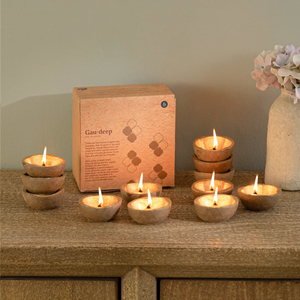
A Navratri table setting will definitely include a centrepiece that consists of diyas or terracotta lanterns. It will not only bring a luminous glow to the dining space but also create theatrical shadows.
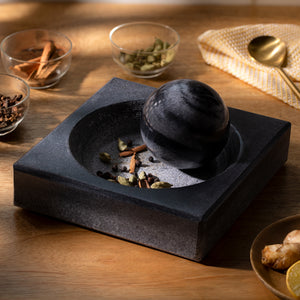
Fill a marble urli bowl with water and flower petals. Let some clay diyas float in it for a traditional look and organic feel. Small candle holders or glass diyas can serve as decorative accents to add some character to the table.
An organic linen runner with flower petals and wax diyas will offer an earthy look with an elegant charm to the overall setting.
If you are planning to refresh your festive dining collection, you can buy Navratri thali online or buy serveware online to explore options that complement your table. Those looking to buy ceramic dinnerware online or buy ceramic plates online can also find pieces that bring together everyday functionality and festive charm.
FAQs
What should be included in a Navratri thali?
A Navratri thali can include sabudana khichdi, kuttu puri, samak rice, vrat-friendly vegetables, curd, chutney, fruits and a sweet such as kheer or halwa.
Which type of plate is best for Navratri fasting food?
Brass, copper, ceramic or food-safe wooden plates can work well. Choose one that is spacious enough for the meal and easy to maintain.
Can ceramic bowls be used for fasting meals?
Yes. Food-safe, glazed ceramic bowls are suitable for serving fasting meals and are easy to clean and maintain.
How do you arrange a Navratri thali at home?
Place the main dish at the centre or lower half, arrange smaller bowls around it, and keep snacks, fruits and beverages within easy reach.
What serveware is best for serving Navratri snacks?
Ceramic bowls, wooden platters and serving boards work well for snacks such as makhana, sabudana vada, kuttu puri and dry fruits.
How can I make a Navratri thali look stylish?
Create a cohesive colour palette, mix materials like ceramic and wood, vary shapes and sizes, and add diyas or fresh flowers for a festive touch.

