



The Yogic Kitchen: Ayurveda-Inspired Cookware & Vessels That Ancient Indian Wisdom Swears By
 Share
Share
Before there were non-stick pans, before there was stainless steel, before the rise of Teflon coatings, there was a kitchen that worked.
It worked for thousands of years. It fed civilisations. It produced food that was, in nutrition, flavour, and the experience of eating—superior to what most modern kitchens produce today.
That kitchen was made of clay. Of brass. Of copper. Of marble. Of wood. It was the Indian kitchen. And on this International Yoga Day, it is worth asking: what did it know that we have forgotten?
What Ayurveda Actually Says About the Vessels You Cook In
Ayurveda does not treat cooking vessels as incidental. The patra (the vessel) is considered an active participant in the preparation of food. Different materials are understood to have different gunas (qualities) that interact with food during cooking, storage, and serving.
Earthen or clay vessels (mitti ke bartan): Considered sattvic—pure, grounding, and conducive to health. Clay is slightly alkaline, which counteracts the acidity of many cooked foods. It retains moisture, distributes heat evenly, and is understood in Ayurveda to add prana, the life force to food prepared within it.
Brass (pital) and copper (tamba): Deeply auspicious in Ayurvedic tradition. Water stored overnight in a brass vessel develops antimicrobial properties. Cooking in brass imparts trace minerals like zinc & copper, that modern diets are frequently deficient in. Ayurveda specifically recommends brass for pitta-balancing foods.
Stone and marble: Cooling. Ayurveda prescribes the use of stone grinding implements the sil-batta and okhli-musal, specifically because the cold surface of stone draws heat from spices during grinding, preserving volatile aromatic compounds that heat-processing destroys.
Terracotta & Earthen — The Sattvic Cooking Vessel
Of all the materials in the Ayurvedic kitchen, clay is the most universal. It is mentioned in the Charaka Samhita. It is the cooking vessel of Krishna's household in Vrindavan. It is the humble matka that has cooled water in Indian courtyards for three thousand years.
Why it makes food better — scientifically: Terracotta is porous. As food cooks inside a clay vessel, moisture circulates, evaporating through the walls and condensing back into the food. This creates a micro-environment of moisture and heat that is difficult to replicate in sealed steel or ceramic-coated pans. The result: more tender proteins, more developed flavours, more retained nutrients.
A clay-cooked dal does not taste like a pressure-cooker dal. This is not nostalgia. It is chemistry.
Ellementry's terracotta cookware range—including clay fry pans, saucepans, and multi-utility vessels, is designed for modern stovetops while honouring the traditional material. Every piece is handcrafted. Every piece is food-safe.
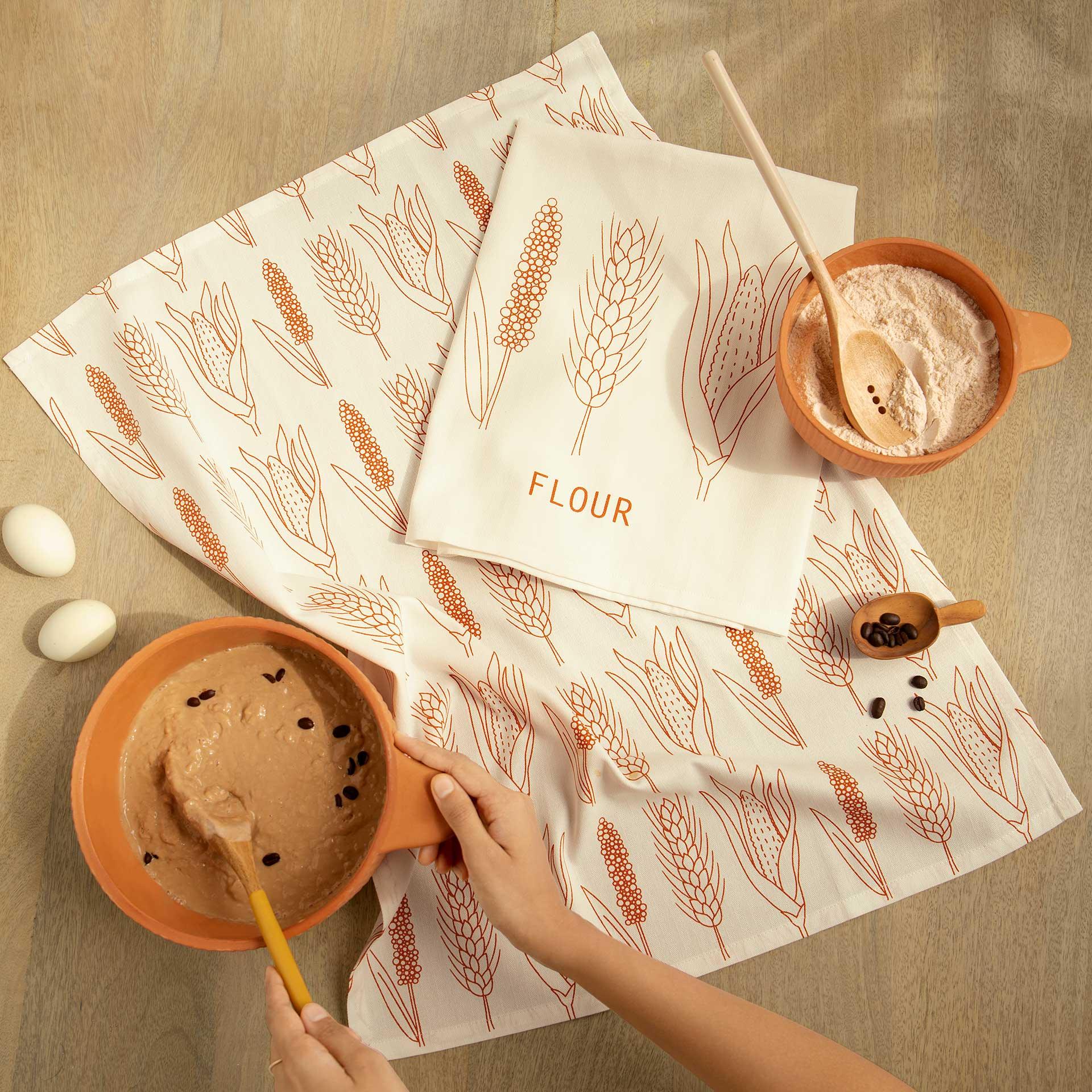
Of all the materials in the Ayurvedic kitchen, clay is the most universal. It is mentioned in the Charaka Samhita. It is the cooking vessel of Krishna's household in Vrindavan. It is the humble matka that has cooled water in Indian courtyards for three thousand years.
Why it makes food better — scientifically: Terracotta is porous. As food cooks inside a clay vessel, moisture circulates, evaporating through the walls and condensing back into the food. This creates a micro-environment of moisture and heat that is difficult to replicate in sealed steel or ceramic-coated pans. The result: more tender proteins, more developed flavours, more retained nutrients.
A clay-cooked dal does not taste like a pressure-cooker dal. This is not nostalgia. It is chemistry.
Ellementry's terracotta cookware range—including clay fry pans, saucepans, and multi-utility vessels, is designed for modern stovetops while honouring the traditional material. Every piece is handcrafted. Every piece is food-safe.
Brass & Copper — Why Ancient India Never Used Plastic
The question "is brass good for cooking in India?" has a simple answer: India cooked in brass for millennia before it had any other option, and the culinary and health traditions that developed during that time are among the most sophisticated in the world. The connection is not coincidental.
Brass vessels are naturally antimicrobial. They do not corrode in the presence of food. They retain heat in a way that allows for gentle, even cooking, & the trace minerals they impart. Co, like pper &zinc are essential for immune function, enzyme production, and nerve health.
Ellementry's brass and metal collection brings this tradition into contemporary design—utensil holders in hand-finished brass, and accessories that bridge the ancient and the elegant.
Ayurvedic guidance on brass: For optimal benefit, store water in a brass vessel overnight and drink first thing in the morning. Use brass or copper utensils for stirring and serving warm foods. Avoid acidic foods (tamarind, lemon) in brass vessels without a tin lining.
The Mortar & Pestle — Why Grinding by Hand Changes the Food
There is a People Also Ask question that appears frequently in Indian search:
"What's better than a mortar and pestle?" The honest answer, from both a culinary and an Ayurvedic perspective, is: nothing.
The mortar and pestle—the okhli and musal in Hindi, the ammikkal in Tamil is not a primitive tool. It is a precision instrument for releasing flavour compounds that bladed grinding destroys.
When you blend spices in a mixer, the heat generated by friction at high speed volatilises and disperses the aromatic compounds before they reach the food. When you grind in a stone or marble mortar, the cold surface of the stone preserves them. The paste that emerges is fundamentally different in flavour & ismore complex, more present, more alive.
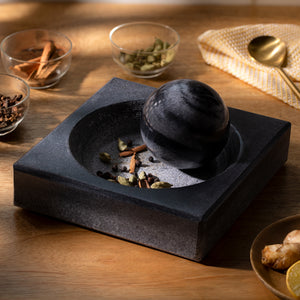
Ellementry's Erebus Marble Mortar & Pestle is hand-carved from natural marble. The weight of it in your hands, the sound it makes is the sound of Indian cooking done right.
The Chakla Belan — The Yoga of Rotis
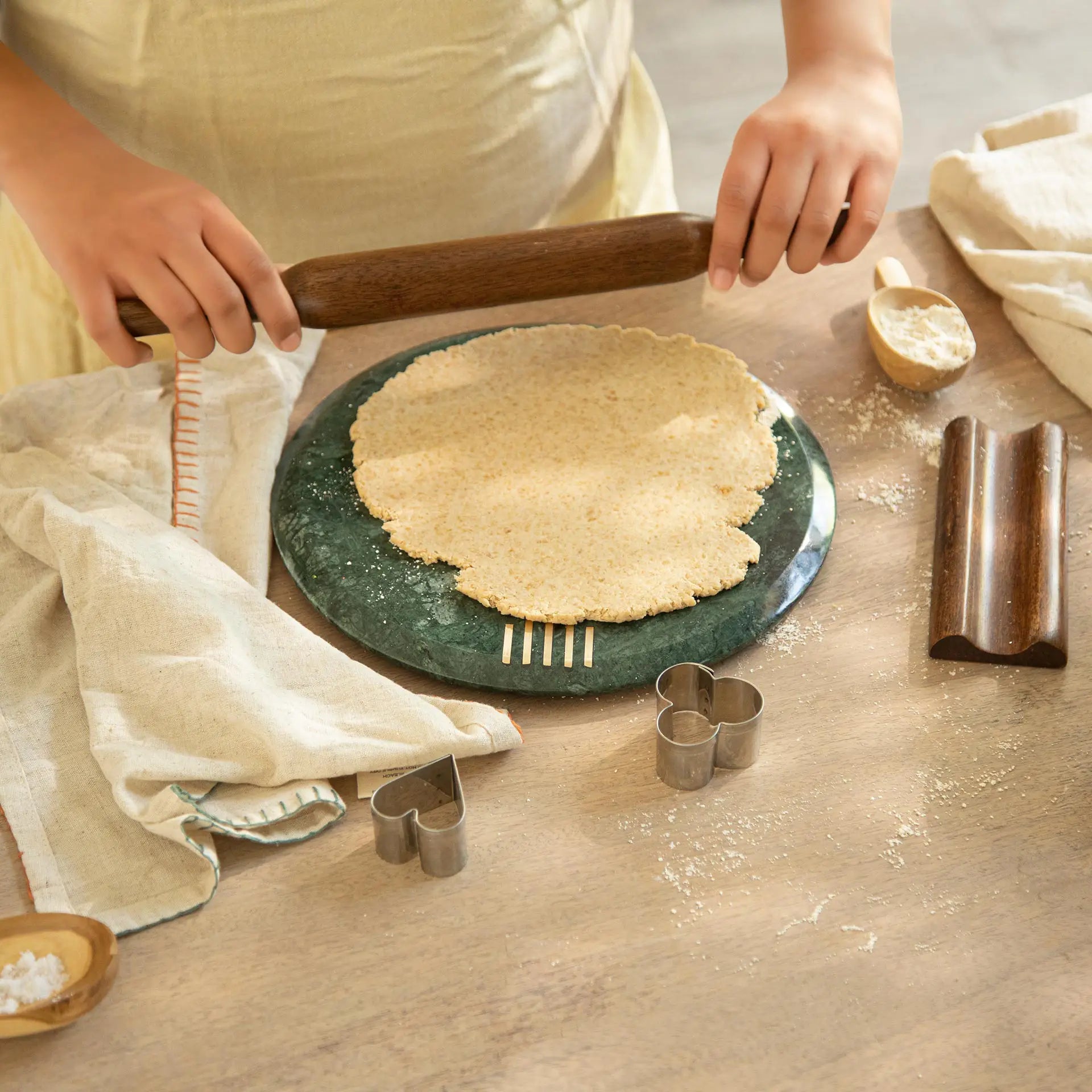
There is a meditative quality to the rolling of rotis that no machine can replicate. The rhythm of the chakla belan is one of the oldest domestic practices in India, a daily ritual that has been performed in every region of the country, in every socioeconomic context, for thousands of years.
The marble chakla belan keeps the dough cool as it is rolled, a principle straight from Ayurvedic cooking theory, which holds that cool surfaces produce lighter, more easily digestible bread. Ellementry's chakla and belan sets are hand-finished in marble and wood surfaces that are cool to the touch, naturally non-stick, and genuinely beautiful on a kitchen counter.
Stone & Marble — Cooling Surfaces in the Ayurvedic Kitchen
Frequently Asked Question
Is terracotta safe for cooking food?
Yes. Terracotta is completely food-safe when properly fired and unsealed. It contains no synthetic coatings, no PTFE, and no PFOA. Ellementry's clay cookware is fired to food-safe temperatures, certified for use on stovetops, and designed to enhance rather than contaminate food. Terracotta is widely recommended in Ayurveda as the ideal sattvic cooking vessel.
Is brass good for cooking in India?
Yes. Brass has been used for cooking and water storage in India for thousands of years. It is naturally antimicrobial, does not corrode in normal cooking conditions, and imparts beneficial trace minerals (copper, zinc) to food and water. For acidic dishes, brass vessels with a traditional tin lining (kalai) are recommended. Modern brass accessories and serving vessels from Ellementry are food-safe and ideal for serving warm food.
What is the best material for cooking vessels according to Ayurveda?
Ayurveda recommends different materials for different purposes: clay and terracotta for slow cooking and water storage (sattvic, mineral-rich), brass and copper for water storage and general cooking (antimicrobial, mineralising), and stone or marble for grinding and cooling surfaces. Ellementry offers handcrafted versions of all these traditional materials.
What is the difference between a stone mortar and a marble mortar and pestle?
Both are excellent, but marble is cooler to the touch and particularly suited to grinding spices—its cold surface preserves volatile aromatic compounds that heat destroys during blending. Stone (granite) is heavier and better suited for wet grinds like chutneys. Ellementry's Erebus Marble Mortar & Pestle is ideal for daily spice grinding.
Why is a chakla belan better than a rolling pin on a wooden board?
A marble chakla (rolling board) keeps dough cool during rolling, producing lighter and more digestible rotis — a principle consistent with Ayurvedic cooking theory. Marble's natural cool surface also acts as a non-stick surface without any chemical coating. Ellementry's marble chakla and wooden belan set is designed for daily use in Indian kitchens.

