



Step-by-Step Guide to Organize Your Kitchen with Functional & Stylish Accessories
 Share
Share
The kitchen is also known as the heart of the home, but when the heart is weighed down by cluttered cabinets and mismatched lids, cooking becomes a chore than a pleasure. Organizing your kitchen is not only about clearing space. It’s about designing a workflow that respects your time, your ingredients and the fulfilling joy of making a meal.
With the help of sustainable materials such as handmade ceramics and wood and some creative kitchen organization ideas, you can transform a disorganized kitchen into a "sanctuary of thoughtful design." Here is your step-by-step guide to creating a kitchen that is both functional and pleasing.

Why kitchen organization is important for home cooking
An organized kitchen changes how you cook and how you feel while doing it. When everything has its place, you avoid "decision fatigue." You don’t have to spend precious time looking for cumin while the onions are burning. In addition to functionality, an organized kitchen promotes food safety and mindfulness. Using materials such as terracotta or lead-free ceramics, you can be assured that your ingredients are fresh, while a sense of order inspires you to appreciate the process of feeding yourself and your loved ones.
Step 1 - Declutter what you don’t use
When you are decluttering your kitchen, remember the phrase "Why keep it when you don’t use it?” We understand that you buy everything with lots of love. And soon, it will become a part of your kitchen family. Some become companions while others fade in the background. Decluttering does not mean discarding without thought. It means editing with intention.
Before you purchase a single new container, you need to rethink. Empty your cupboards and assess your tools. But how? Read on to learn.
Let your kitchen hold only what it needs. That cup that’s been collecting dust for so long, the peeler that’s been hiding in the drawer, they know their time has come and gone. Open your shelves and take a deep breath. Do your spices still retain their warmth and scent, or have they been relegated to memory? Let go of what no longer sustains. Let go of the grains that have had their season. Keep what serves, what delights, what feels good in your hands and pleasing to the eyes. A kitchen, after all, is most beautiful when function and poetry coexist on the same shelf.
Step 2 - Create kitchen work zones
Although it may seem like one big area, the kitchen is actually many. Each corner has its own function, and each surface has its own duty. When carefully sectioned off into zones for preparation, cooking, cleaning, and storage, the kitchen’s rhythm becomes easy to follow.
You can segment your kitchen into three different zones. First, there would be the prep zone, where you can store your cutting boards and knives. This should be located next to the trash bin or compost, so you can dispose off the trash easily.

Second, there would be a cooking station where flavors are brought to life by the flame. You can keep your favorites like wooden spatulas and ladles in a ceramic crock right next to the stove. Finally, set up your coffee or tea station where cups, sugar pots, and tea jars would be together, ready to help you transition into a smooth morning routine.
Step 3 - Select the proper storage jars and containers
You might be wondering if the plastic is still usable in your kitchen. The truth is, plastic is out, and sustainable, non-toxic materials are in. After all, they would be in direct contact with your food. They had better be sustainable and of good enough quality for you and your food for the long haul.
The best containers for storing food are made of glass and ceramics. You can use glass containers for items you need to spot quickly, such as pasta or lentils, and ceramic containers for items you do not want exposed to light, such as tea leaves.

Additionally, you can consider the sustainability and usability of the containers. Look for the containers with wooden lids and silicone rings. These will give you an airtight seal to keep your food crisp while giving you a warm, earthy feel to your shelves.
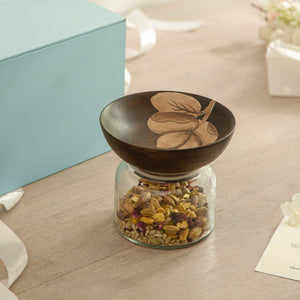
An interesting take is to combine storage and serve in one functional jar. Like our tashi glass jar with wooden nut bowl .
Step 4 - Organize spices, grains, and essentials smartly
Spices and grains are the heartbeat of an Indian kitchen. They deserve more than a plastic bag that gets tucked away in one corner of the room.

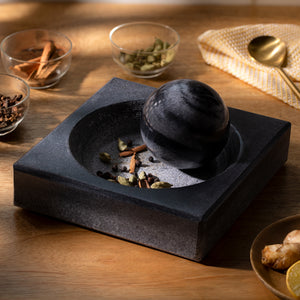
Rather than storing them in disorganized plastic bags, you can use a Masala Dan (Spice Box). A handmade wooden spice box not only keeps your most frequently used spices in one convenient place, but it also serves as a centerpiece for your kitchen counter.
For grains, you can use tiered shelving or identical jars to make the most of vertical space in your pantry. Moreover, if your jars are not transparent, you can use simple labels to keep the look clean and luxurious.
Step 5 - Keep countertops clean yet stylish
Your countertops are your battle zone. A "clear" countertop doesn't have to be a "bare" one. The idea is to keep only the things you use daily within reach, but pick versions that serve as decor as well.
Make functionality meet style. Instead of a plastic fruit bowl, you can use a hand-painted ceramic platter or a wooden bowl. Trays can be used to organize your kitchen counter and also bring some drama to it. Grouping small items (such as your oil caster and salt cellars) on a single wooden tray will make your countertop look deliberate and organized, not cluttered. You can check out this floral wooden platter to know how easily you can organize the dishes on the plate.
Daily habits to keep the kitchen organized
Organizing your kitchen is not a deadline, it is the rhythm that you go back to. To maintain your kitchen as a spotless shining haven. Keep the following things in mind.
1. The "Clean as You Go" Rule: Wash your prep bowls while your main dish is simmering. It would not only save you a lot of time but also reduce the risk of cluttering on the countertop.
2. The Nightly Reset: Before going to sleep, remove the drying rack and clean the counters so that you can start the next morning afresh. This will help you keep your kitchen area clean and organized every day.
3. One In, One Out: If you bring home a new serving platter, think about giving an old one away so that your collection stays organized. You don’t have to continue curating all those plates and bowls in your kitchen. Just keep all the useful and beautiful ones with you.
4. The "Trash Bowl" Method: During prep work, use a separate "waste bowl" (such as a terracotta bowl) on your counter for vegetable peels and scraps. This keeps your cutting board clean and eliminates the need for multiple trips to the trash can, keeping you on track.
5. The "One-Touch" Rule: Try to handle an item only once. Rather than putting a used spoon on the counter to "handle later," put it straight into the sink or dishwasher. Rather than leaving groceries on the table, put them straight into your ceramic containers.
FAQs
What is the best way to start organizing a kitchen?
The best way to begin is with a full “edit” of your possessions. Empty out every cabinet and use the six-month rule: if you haven’t used it in six months, it’s time to say goodbye. After you’ve decluttered, organize your remaining essentials into zones, such as prep, cooking, and coffee zones, to make sure your most-used tools are right where you need them.
How do I keep my kitchen looking stylish and functional?
The trick is to use "functional decor," where all functional items are beautiful enough to be displayed. Get rid of the mismatched plastic and replace it with ceramics, wood, and terracotta to add texture to your space. Organize your smaller items, such as oil caster and salt cellars, using trays, turning these functional items into a deliberate display.
Which accessories help with kitchen organization?
Invest in high-quality, sustainable storage containers, such as ceramic jars for light-sensitive foods and glass jars for visible pantry staples. A wooden Masala Dan is a must-have for organizing your spices in one place, and tiered shelves are great for maximizing vertical storage space for storing grains. Using identical storage containers with wooden lids not only creates an airtight seal but also gives your kitchen a luxurious look.
How often should I reorganize my kitchen?
Whereas your regular habits keep the clutter at bay, it is important to do a quick “refresh” every three months. This will give you the opportunity to get rid of expired ingredients, switch out seasonal serveware, and ensure your storage solution remains functional for your current habits. This will keep clutter from piling up and ensure that your kitchen remains a highly functional haven.

