



The Earth Day Kitchen Edit: 12 Sustainable Swaps That Are Better for the Planet (and Your Home)
 Share
Share
Every April 22, the world pauses. Climate reports flash across screens. Petitions circulate. Candles are lit, sometimes literally for the planet. And then, quietly, most of us return to the kitchen and reach for the same plastic spatula, the same non-stick pan, the same petroleum-derived wrap that we've been using for years.
Here's what nobody talks about on Earth Day: your kitchen is one of the most powerful places to begin.
Not because the kitchen is glamorous. But because its where you spend hours every single day. Where your food touches its surfaces, absorbs its materials, carries its character to your table. When the vessels you cook in are made from the earth, like clay, brass, marble, wood, terracotta, something shifts. Not just environmentally. But in the quality of what you eat, how you feel, and what your home becomes.
This Earth Day, we're not asking you to overhaul everything at once. We're asking for 12 considered swaps, each one rooted in Indian craft tradition, built to last, and genuinely better for the planet than what it replaces.
Swap 1–3: Terracotta — The Original Eco-Cookware
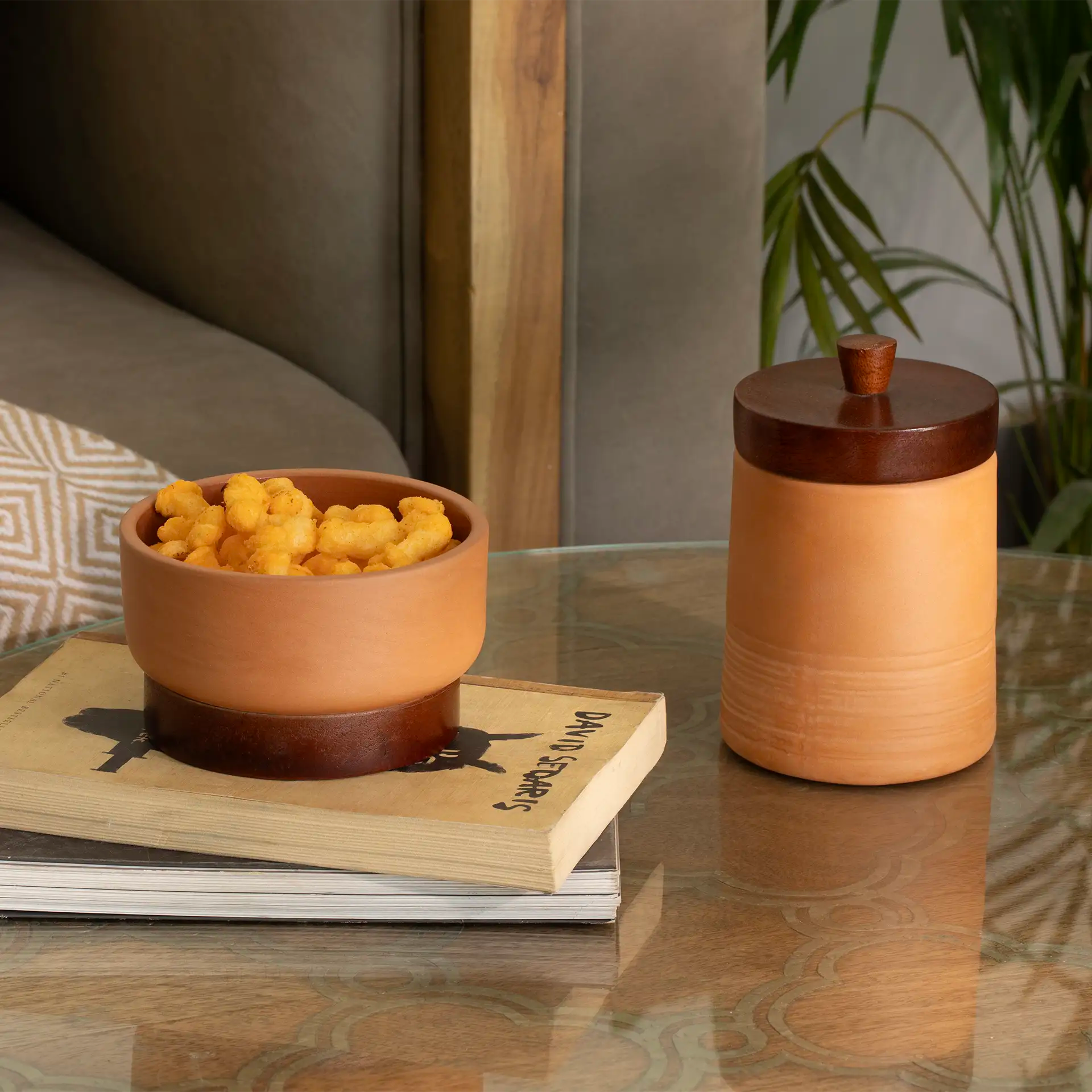
Swap 1: Aluminium baking dish →
Terracotta Baking Dish
The aluminium baking dish you rely on is a reactive metal that leaches into your food at high temperatures especially with acidic ingredients and cannot be recycled infinitely without industrial energy cost.
The alternative India has always known: terracotta. Shaped from natural clay, fired in a kiln, and returned to the earth at the end of its life with zero waste, zero chemicals. A terracotta baking dish distributes heat evenly, retains moisture naturally, and enriches every bake with minerals instead of metals. It doesn't wear out with use, lasts decades, and leaves no landfill trace behind.
Explore Ellementry's Clay Cookware Collection
Swap 2: Plastic water bottle → Terracotta Water Bottle
Plastic bottles leach microplastics into your water especially when warm. Terracotta, by contrast, naturally cools water through evaporation, infuses it with trace minerals, and keeps it at the temperature your body actually wants. The same vessel your grandmother called a matka. Now designed for the life you live today. Carry it to the office. Set it on your yoga mat. Fill it before a morning walk.
Swap 3: Plastic storage containers → Earthen Pots & Terracotta Jars
Your pickles, curd or overnight oats, all taste different when stored in clay. It breathes. It regulates. It doesn't leach. Studies in food science consistently confirm that fermented foods stored in earthen pots develop richer probiotic cultures than those stored in plastic or steel. Swap three plastic containers this Earth Day, and notice the difference within a week.
Read: Health Benefits of Terracotta Kitchenware
Swap 4–6: Brass & Copper — India's Original Functional Metals
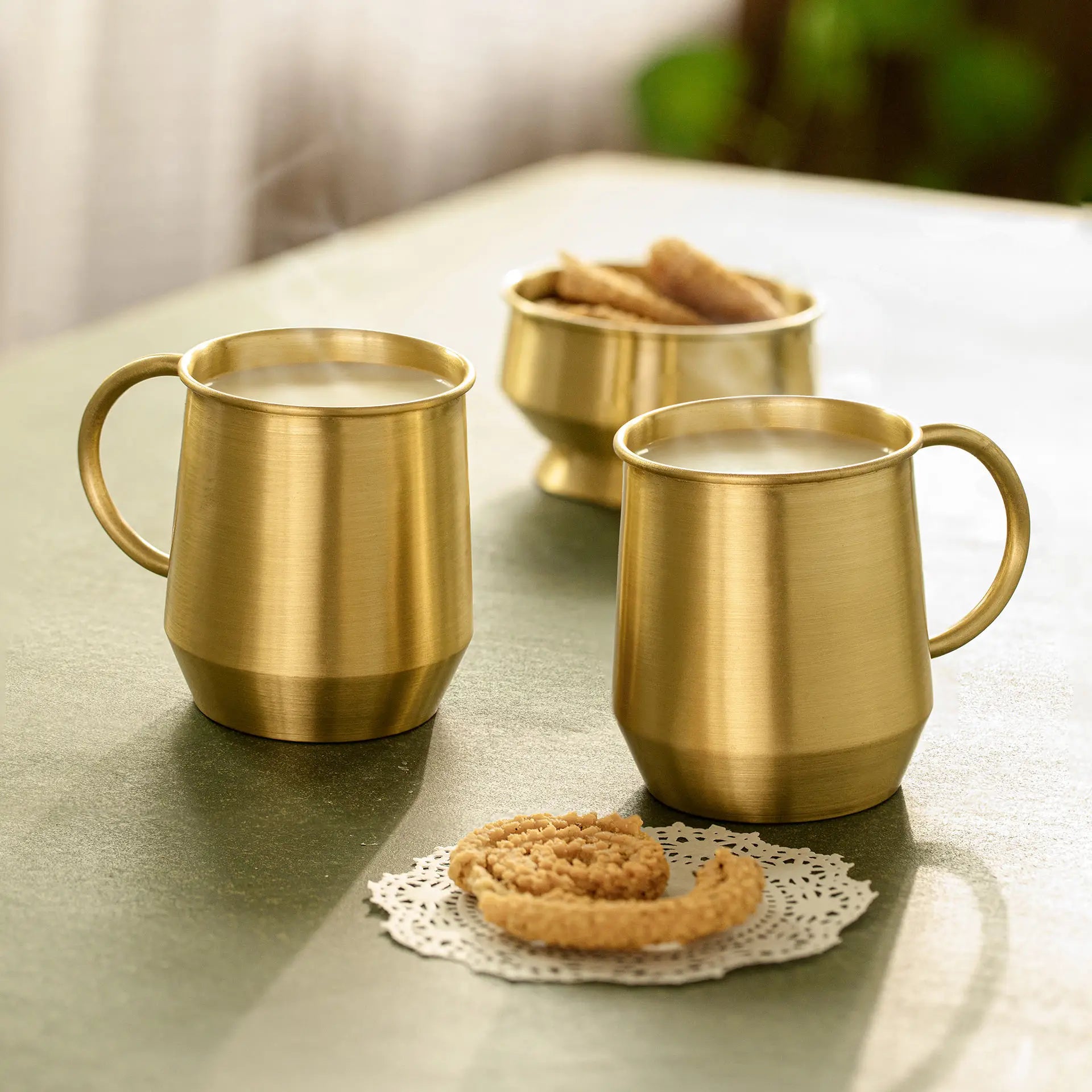
Swap 4: Stainless steel spatula → Wooden Spatula
Stainless steel on a hot pan is a scratch waiting to happen and with non-stick coatings, it's also a health concern. A wooden spatula from sustainably sourced wood does the same job without damaging your cookware, without leaching, and without a carbon footprint that involves smelting and chemical processing. It ages beautifully. It tells a story.
Swap 5: Factory-pressed serving bowls → Wooden bowl
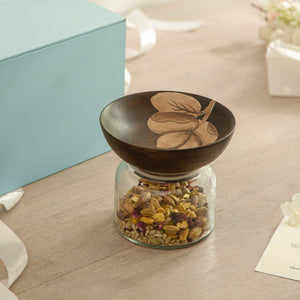
The wooden bowl is one of India's most ancient vessels used for floating flowers, serving food, and rituals that blur the line between the aesthetic and the sacred. A wooden bowl on your dining table is simultaneously functional serveware, stunning décor, and a piece of living heritage. Unlike factory-made steel bowls, ellementry’s wooden bowls are handcrafted.
Swap 6: Plastic or acrylic utensil holder → Wooden Utensil Holder
Everything in your kitchen that you reach for dozens of times a day deserves to be beautiful. Swap the plastic caddy on your counter for a handcrafted utensil holder in brass or wood. It's the kind of change that makes you pause when you walk into your kitchen — and feel, quietly, that you live well.
Explore Ellementry’s Wooden Serveware Collection
Swap 7–9: Wood & Glass — The Transparent, Toxin-Free Kitchen
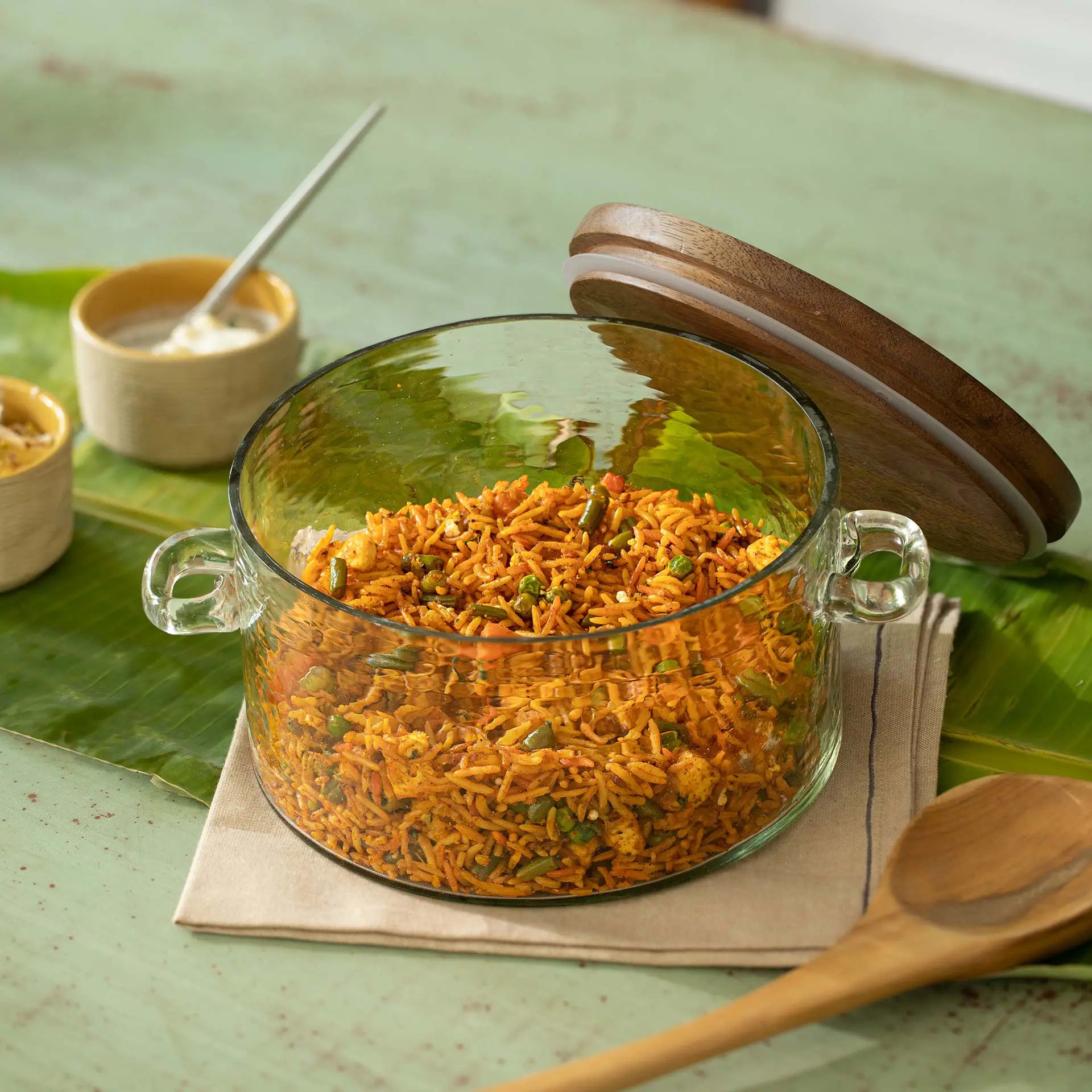
Swap 7: Plastic cutting board → Wood Chopping Board
Plastic cutting boards are the silent villain of the modern kitchen. Every knife stroke creates microscopic plastic particles that are impossible to fully clean and that end up in your food. A wood chopping board is naturally antibacterial, self-healing, and infinitely more durable. Teak and acacia boards from Indian craftspeople will last decades with basic care (a monthly oil rub). Your plastic board will not.
Swap 8: Plastic water dispenser → Glass Water Dispenser
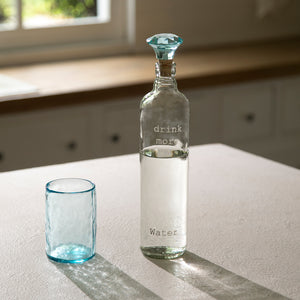
If there is one swap on this list that changes how your entire kitchen feels, it is this one. A glass water dispenser on your counter feels clean, chemical-free, and beautiful in a way no plastic jug ever can. It communicates something about how you want to live. And glass, unlike plastic, is infinitely recyclable, a closed loop that doesn't degrade.
Read: 5 Reasons Glass Water Dispensers Are Perfect for House Parties
Swap 9: Melamine serving ware → Ceramic Dinnerware
Melamine is a plastic resin. When heated in a microwave or exposed to hot food, it gets released into your meal, along with formaldehyde. Ceramic, fired at high temperature, is completely inert. It doesn't react with food, doesn't leach, and doesn't degrade. And the right ceramic dinnerware, handmade, glazed by hand, & unique in the most beautiful way, turns every meal into an occasion.
Swap 10–12: Linen, Ceramic & Conscious Choices
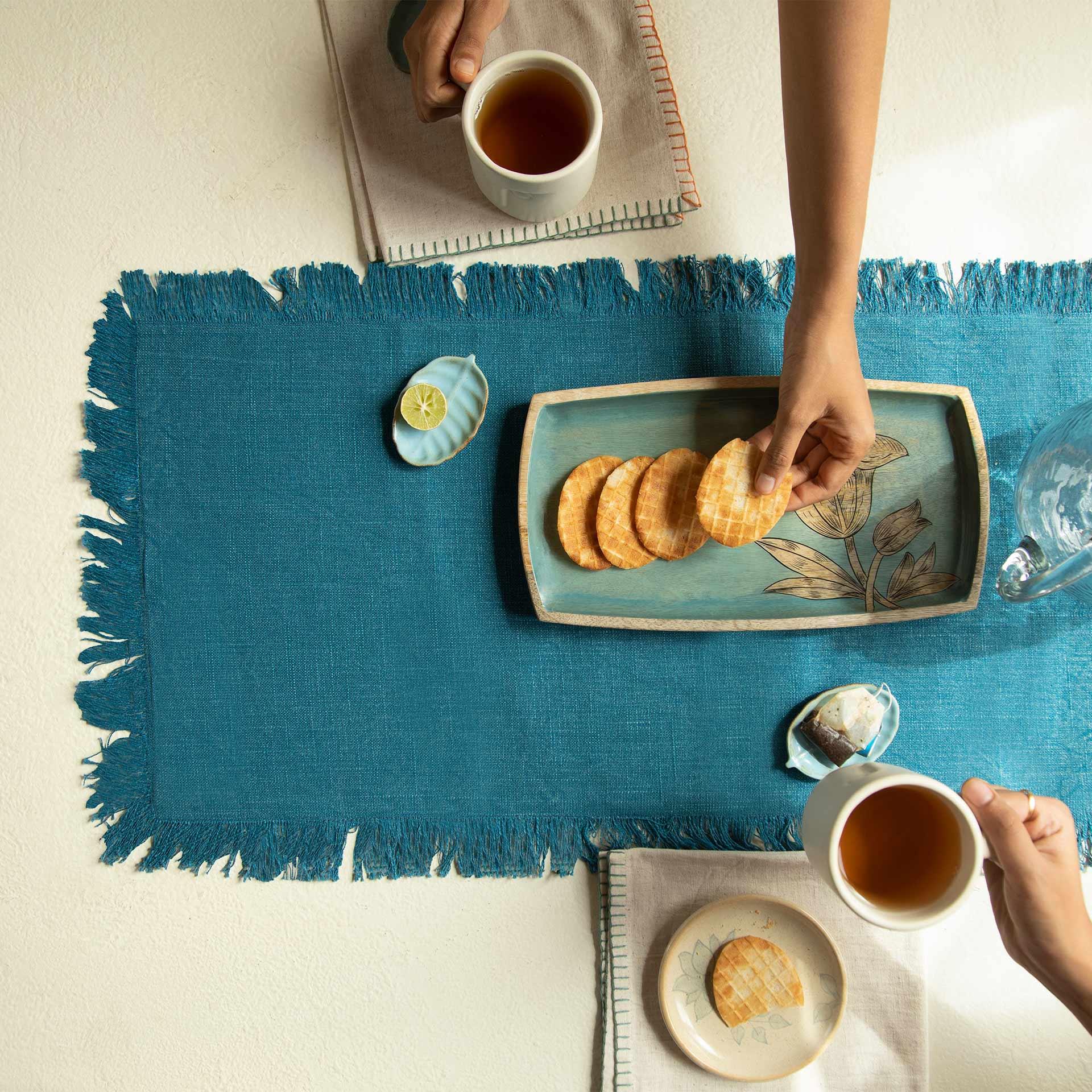
Swap 10: Paper napkins → Cotton Linen Napkins
The average Indian household uses hundreds of paper napkins a month. Multiply that by 140 crore people and the numbers become staggering. A set of cotton linen napkins washes beautifully, lasts years, and brings a quiet elegance to every meal. It's also the smallest possible swap and often the most immediately satisfying.
Swap 11: Machine-made mugs → Handcrafted Ceramic Mugs
Your morning chai or coffee is a ritual. The mug you hold for it matters more than you think. A handcrafted ceramic mug with its slight weight, its individual glaze, its maker's fingerprints baked into its surface brings a presence to your morning that no factory mug can replicate. And it's made from clay, fired in a kiln. Its footprint is a fraction of the machine-moulded alternatives.
Swap 12: Synthetic table runner → Natural Fibre Table Runner
This is the swap for the whole table. A natural fibre or cotton table runner in a handwoven pattern takes your dining table from functional to intentional. It's the visual anchor that says- “this household chooses craft over convenience, Earth over plastic, beauty over disposability.”
Start Somewhere. Start Today.
You don't need to do all twelve at once. Pick one. The terracotta water bottle. The wooden chopping board. The ceramic mug for your morning chai. Let it be the beginning of a kitchen that is genuinely, quietly, better for the planet and for every person who eats at your table.
Shop the Earth Day Edit → Sustainable Kitchenware at Ellementry
Frequently Asked Questions
Is terracotta eco-friendly?
Yes. Terracotta is one of the most eco-friendly materials in the world. It is made from natural clay, fired without toxic chemicals, and fully biodegradable at the end of its life. It requires no mining of rare metals, no synthetic coatings, and no industrial processing. Ellementry's terracotta products are handcrafted by Indian artisans using traditional firing methods.
Are clay pots safe for cooking?
Absolutely. Clay pots have been used for cooking across India for thousands of years. They are naturally non-toxic, free from PTFE and PFOA coatings, and actually enhance food with trace minerals. They retain heat beautifully and are particularly excellent for slow-cooked dishes like dal, biryani, and curries.
Are brass utensils good for health?
Yes. Brass and copper utensils have been used in Ayurvedic tradition for centuries. Water stored in brass vessels overnight develops antimicrobial properties. Brass cooking utensils do not leach harmful chemicals, unlike plastics or low-quality non-stick coatings. They are durable, beautiful, and a genuinely healthy choice for the home kitchen.
What is the best sustainable swap for a plastic water bottle in India?
A terracotta water bottle is the most eco-friendly alternative. It naturally cools water through evaporation, requires zero electricity or refrigeration, and is made entirely from natural clay. Ellementry's Terracotta Water Bottle with Sphere Stopper is handcrafted, food-safe, and designed for everyday use.
Is wooden kitchenware better than plastic?
Yes, in most respects. Wood is a natural, biodegradable material that does not leach microplastics into food. Wooden chopping boards are naturally antibacterial — studies have shown that wood's porous structure traps and kills bacteria that plastic boards harbour in surface scratches. With proper care (occasional oiling), wooden kitchen tools last significantly longer than plastic alternatives.

