



Slow Down, Live Better: How the Cycling Mindset Transforms Your Kitchen & Home
 Share
Share
There is a particular joy that cyclists know and that car drivers rarely do: the joy of moving at the speed of the world.
On a cycle, you hear the city. You smell the bakery on the corner. You notice that the gulmohar tree at the end of the street has started to bloom. You arrive at your destination slightly warmer, slightly more present, and entirely more connected to the life around you than you were when you left.
On a cycle, efficiency is not the point. The journey is.
This World Bicycle Day, June 3, 2025, we want to suggest something: the same philosophy that makes cycling beautiful applies to your kitchen, your home, and the way you eat.
The Cyclist's Manifesto — and What It Has to Do with Your Kitchen
Cycling culture, at its best, is a philosophy of intentionality. You choose to slow down when the world tells you to speed up. You choose human effort when machines are available. You choose connection over convenience.
The slow living movement in India, growing steadily in cities like Bangalore, Delhi, Gurugram, and Kochi, is rooted in the same insight. That the fastest option is not always the best one. That mass-produced products are not the same as well-made ones. That the food cooked slowly in a clay pot tastes different—fundamentally, measurably different from the same food pressure-cooked in a stainless steel vessel.
Urban India's most conscious households are already making this shift. Not all at once but one considered choice at a time. A wooden chopping board instead of a plastic one. A terracotta water bottle instead of a BPA-laden plastic bottle. A clay pot on the stovetop instead of a non-stick pan with a coating that wasn't designed to be eaten.
What to Eat After a Ride and the Vessels That Make It Better
Every cyclist knows: the post-ride meal is sacred. Your body has worked. It wants real food, not a protein shake in a plastic shaker, but something warm, mineral-rich, and made with intention.
Dal in a clay pot. This is the post-ride meal that Ayurveda and sports nutrition, independently, agree on. The slow heat of clay draws out the mineral content of lentils more completely than steel. The earthen vessel adds trace minerals like calcium, magnesium, iron that a hard ride depletes. And it tastes the way dal tasted in your childhood, which is not a small thing.
Ellementry's clay cookware collection includes clay saucepans, fry pans, and multi-utility vessels designed for exactly this kind of cooking—slow, intentional, and genuinely nourishing.
Served in ceramic bowls. The weight of a hand-thrown ceramic bowl in your hands after a ride is grounding in a way that a plastic or melamine bowl simply is not. It signals to your body: you are home. You are fed. You are well. Shop Ellementry's ceramic dinnerware.
Hydration, Reimagined with the Terracotta Water Bottle
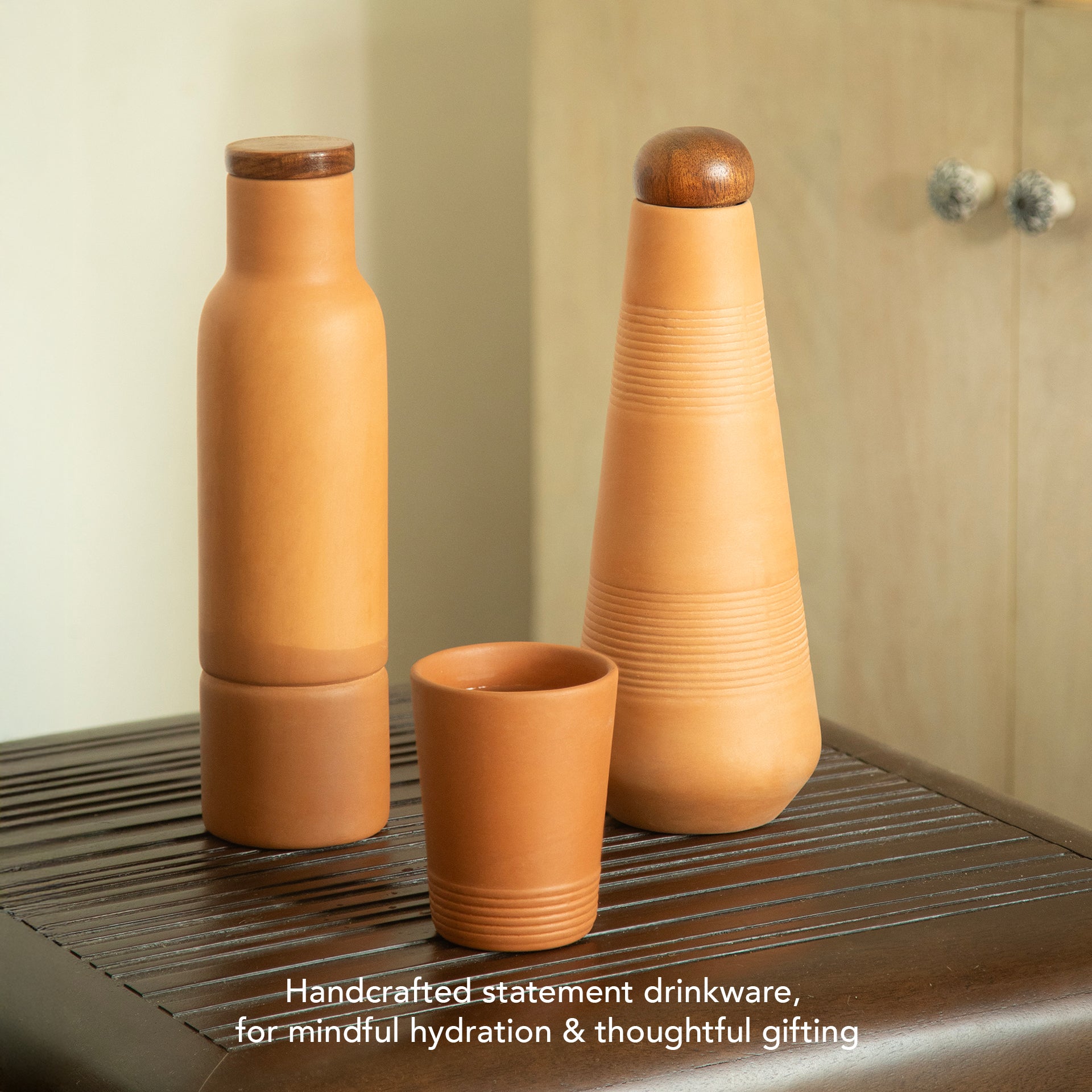
Cyclists are obsessive about hydration (as they should be). But most cycling bottles are made from BPA-free plastic (still plastic) or aluminium with synthetic linings. The alternative that Indian summers have always known: terracotta.
A terracotta water bottle keeps water 5–10°C cooler than the ambient temperature through natural evaporative cooling—no refrigeration, no insulation technology, no electricity. It is the most sustainable cooling solution ever invented, and it was invented in India.
Carry it on your rides. Set it on your desk. Put it beside your yoga mat. The water inside it tastes different—cleaner, more mineral, more alive than water from a plastic bottle.
Read: How Terracotta Helps Maintain Food Temperature Naturally
Slow Mornings, Fast Rides — The Pre-Ride Breakfast Ritual
The best cycling mornings begin slowly. Before the wheels turn, there is tea. There is oats or poha or something warm. There are a few minutes of quiet.
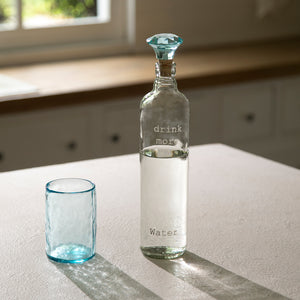
The vessels you use for this ritual matter more than you think. A handcrafted ceramic mug for your chai. A wooden serving tray to carry breakfast to the balcony. A glass carafe of water on the table, because you know you need to pre-hydrate.
These are small choices. Together, they constitute a morning practice and morning practices are what make the rest of the day possible.
5 Home Swaps for the Cyclist Who Already Lives Consciously
You've already made the choice to cycle instead of drive. Here are 5 home swaps that match that philosophy:
-
Plastic cutting board → Teak wood chopping board — durable, antibacterial, zero microplastic contamination.
-
Non-stick pan → Clay fry pan — no toxic coating, better heat distribution, genuinely better food.
-
Plastic water dispenser → Glass water dispenser — clean, chemical-free, beautiful on the counter.
-
Paper napkins → Cotton linen napkins — washable, elegant, zero waste.
-
Factory-made mug → Handcrafted ceramic mug — made by Indian artisans, lasts decades, feels right in the hand.
Read: Wood vs Metal vs Ceramic: Best Materials for Serveware Explained
The Ride Continues at Home
World Bicycle Day is a celebration of human-powered movement. But the most revolutionary act of the slow living cyclist isn't the ride, it's what happens when they return home and choose, deliberately, how to cook, eat, and live.
Your kitchen is where the ride ends. Make it worthy of the journey.
Frequently Asked Questions
What is slow living and how do I start in India?
Slow living is a philosophy of intentional, unhurried choices, choosing quality over speed, craft over convenience, connection over efficiency. In India, it often starts in the kitchen: replacing plastic and non-stick cookware with clay, terracotta, brass, and wood. Brands like Ellementry offer handcrafted, natural material homeware that makes slow living both accessible and beautiful.
Is a terracotta water bottle good for daily use?
Yes. Terracotta water bottles are excellent for daily use. They naturally cool water through evaporation, keeping it 5–10°C cooler than ambient temperature, without refrigeration. They are completely natural, biodegradable, and infuse water with trace minerals. Ellementry's Terracotta Water Bottle with Sphere Stopper is designed for modern daily use and is food-safe.
What is the healthiest material for cooking vessels in India?
Clay and terracotta are among the healthiest cooking materials available. They contain no synthetic coatings, distribute heat evenly, and add trace minerals to food. Brass and copper are also traditionally used and are excellent for water storage. Ceramic is ideal for baking and serving. Ellementry's range covers all these materials in handcrafted, food-safe designs.
How do cyclists eat healthy at home?
Cyclists benefit from mineral-rich, high-protein meals like dal, lentil soups, whole grains cooked slowly in clay or terracotta vessels that preserve and enhance nutrient content. Proper hydration from natural vessels (terracotta, glass) rather than plastic is also important. The slow living kitchen philosophy aligns well with the nutritional needs of cyclists.

