

















































































Mortar and Pestle Alternatives: 7 Things You Can Use When You Don't Have One
Indian cuisine is incomplete without spices. One may be in the middle of a recipe and panic sets in when they read, "Crush the cumin seeds or lemongrass to get the best flavours." What can one do if they don’t have a pair of mortar and pestle handy with them? Can some other equipment work in a similar manner? Are there any other alternatives that can work and offer the same taste? Which one would work for which spice and yet offer that symphony of tastes? We have curated a small guide about all the possible alternatives that may or may not replace mortar and pestle that can be available in your kitchen. Read on and find out.
Why people look for mortar and pestle alternatives?

Most Indians have grown up watching their mothers and grandmothers crush the ginger or elaichi in a mortar with the help of a pestle. The smell of the spices when crushed with brutal force used to spread across the house. This probably is one of our most nostalgic childhood memories. Over the years, this tradition has changed dramatically. With the advent of electrical appliances and a convenience-based lifestyle, many alternatives to mortar and pestles are in the market. But why would people want to switch from traditional mortar and pestle that has made its home in every kitchen tool to now. Let’s find out some of the reasons why.
Unlike the new age grinding kitchen appliances, Mortar and pestle do not grind the food into a paste, thereby keeping the rawness and freshness of spices & herbs intact which goes best with Indian cuisine. However, it requires a lot of strength to crush the ingredients, crack the shells to get the best flavours out.
Physical Strain and Fatigue: Grinding hard spices such as jackfruit, turning them into paste requires serious arm strength; which may be difficult & wearsome for many people.
Time and Efficiency: Though some spices are softer than the others like fennel there are hard spices as well that need good blood, sweat & tears to be crushed which often requires them to be grinded for a substantial duration of time.
Weight and Storage: Mortar and pestles are bulky, heavy tools and not the most efficient when it comes to being portable. Because of their size they occupy substantial storage space as well.
Porosity and Cleaning: Traditional mortars and pestles feature naturally porous surfaces such as wood and unpolished stone. During use, fine particles of the ingredients are often pressed into these pores, making them difficult to remove completely during wash. These particles and oils may taint the flavours of the next crush. They also need to be carefully handled as they may chip or crack when dealt with major impact. These also need to be hand-washed as they cannot be put into a dishwasher.
7 alternatives with step-by-step how-to each

With time, better and easy to use mortar and pestles have been invented, both out of necessity and need for convenience. Here are 7 alternatives that may perform as good as mortar and pestle.
-
Spice grinder
Since this one is for dry ingredients only, you need to prep the spices and dry them completely before putting them into the grinder. If you heat and dry them, wait for the temperature to go down first. Once poured, pulse the spices at several intervals instead of holding them at one go as it may cause the inside temperature to rise and may damage the blades. Once prepared to your desired size of grains, empty the vessel into storage container.
-
The Rolling Pin
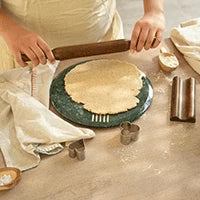
A rolling pin and board or as most often it is known as chakla and belan is considered the best for extremely hard spices such as peppercorns. To use it effectively, pack the spices in a bag or a pouch and place it on a hard surface and apply downward pressure with the help of a rolling pin. The first crack is the hardest part, once achieved, you can roll it back and forth to get the desired results of the spices.
-
A heavy bottomed skillet or saucepan
The science behind mortar and pestle is applied in this method where a heavy pan acts as a pestle. All you need to do is to stabilize your board and arrange the spices accordingly. Press and rock the pan for the spices to break down and get crushed.
-
Fine grater
This is another culinary tool very often found among Indian kitchenware. To use it and get the desired results, angle the tool and grate garlic or ginger in one direction to get tiny fragments and eventually make a paste out of them. Scrape the back of the grater to collect the leavenings.
-
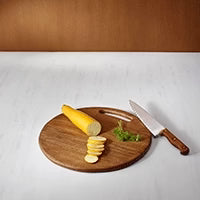
The flat knife method (chef’s knife)
Some recipes require bigger pieces than tiny fragments. The spice must simply crack open and that is all to alter the taste of the cuisine. This method is perfect for such preparations. Smash and mince the garlic after removing its skin, add a pinch of coarse salt or black pepper for taste. Use the flat side of the knife to create abrasions on the cloves of the garlic. Finally, smear and scrape from the surface.
-
The mini food processor/ chopper
A chopper is the easiest, modern alternative to mortar and pestle. Simply roughly cut the pieces and load them into the vessel. Blend for a few extra seconds, once done, scrape the walls to get the ingredients out.
-
Immersion blender/ Stick blender
Among the many alternatives to mortar and pestle, this one can be considered the most convenient one. Pick a narrow jar, layer the ingredients accordingly, then, anchor the stick and blend for a while, and you will get the desired powder or paste.
Which alternative works best for which spice?

Considering the plethora of alternatives, one may wonder, which one would be the best for which spice? All of these can be time-saving and convenient. But, how will you know which one will be the best? We will try to decode and make it simpler for you.
When it comes to hard and highly fibrous spices such as cumin, coriander seeds, cinnamon barks, star anise, cloves and cardamom pods, your best option will be the electric grinder. Its sharp blades and quick movement can cut deep into the strong fibres.
When it comes to hustle-based methods such as skillet or rolling pin, brittle and round spices would be easier to grind. Such ingredients include black, white, or pink peppercorns, coriander seeds but just for crusting, cardamom pods as well as fennel or mustard seeds.
On a similar note, microplane or grater will prove itself best for fresh ginger and turmeric, garlic and whole nutmeg to get fresh and dense aromas out of them. The flat knife method is the most useful and easily accessible method. It also involves little friction as compared to any other method. Garlic cloves and fresh green or red chillies can be easily treated through it.
The immersion blender is the best multi-purpose alternative for obtaining fine pastes and processing ingredients such as lemongrass, galangal, chillies, fresh coriander, cilantro and mint.
When should you just buy a mortar & pestle?
The above-mentioned kitchen hacks may be practiced in case of emergency and electrical appliance can be used when you are either cooking in bulk or you are short on time. Yet, there are several occasions where you can miss the old taste of traditional mortar and pestle. This may lead you to think when and why should you invest in it? Allow us to help you through that.
When you are craving those nostalgic flavours, it may be the right time to buy one for your kitchen. Blenders and food processors shred the fibres into pieces, but mortar and pestle have a distinct mechanism. It crushes out the ingredient and pierces the shells to get the natural juices out of them.
No Indian home is complete without Indian curries. Each curry is based on curry paste which is prepared with the help of grinding into the right tool. Like curries, Thai cuisine, Genovese pesto, fresh chutneys and salsas heavily rely on pastes and emulsions. It is hard to manifest the old taste without the traditional mortar and pestle.
Electrical appliances may be easy to use but washing and storing them requires time and effort. Besides this, when you intend to prepare a meal from scratch, by bringing together the ingredients, prepping them as per the recipe, adding them to the warm broth before they mingle and unfurl its authentic taste, is quite a therapeutic experience.
Why mortar & pestle beats all alternatives?
Even though, there is an availability of so many options, why do some people naturally incline towards food prepared using a mortar and pestle. What is the science and art behind this ancient tool that just knows how to bring out the taste in the best manner possible as completely changes the chemistry, flavour, aroma and overall profile of the food.
One of the reasons is while most of the processors and blenders slice the condiments with their blades, mortar and pestle crushes and shears them, which helps in bring out their raw and natural flavour. Also, contrary to the electronic appliances that separates water from the ingredients, this tool lets them marinate in their juices which makes the food flavourful.
Because of rotation of blades against the ingredients inside the blender, frictional heat is generated which causes the natural oils present in spices and herbs to break, altering their chemistry. A stone mortar stays cold which preserves their vibrant flavours perfectly.
Alternatives to mortar and pestle primarily produce chunky, uneven chopped bits or finely powdered baby food like puree, whereas the combination of mortar and pestle strikes a balance to get beautiful, variegated texture. While some ingredients get completely crushed under the pressure, others retain their original character, hence bringing a spectrum of flavours in every bite.
Product recommendations
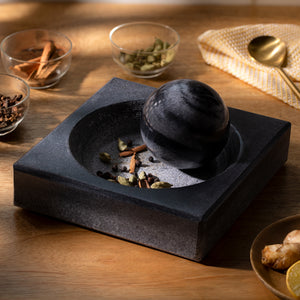
When picking the right mortar and pestle for your kitchen, you need to make the best choice that stays perfect for all the cuisines. The pestle should be heavy so you exert less pressure and mortar should be sturdy and polished to hold all the ingredients while they transform slowly.
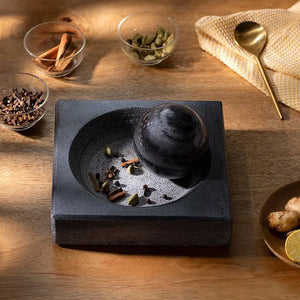
To get the best out of spices, you need a vessel that is handcrafted by keeping the culinary science in mind such as Erebus Marble Mortar and Pestle. At the same time, you may require a shallow one to grind ginger or lemongrass leaves for your tea and garlic cloves for your food, in this case, Swirl and Grind Mortar and Pestle can act as your best companion.
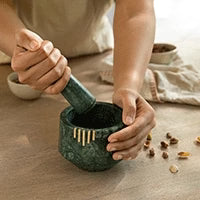
Some spices require a deeper and harder grind to contribute their finest quality, for such purposes, White Marble Mortar and Pestle will hold them until they are ready. For all the multi-taskers out there, a grinder with a chopping board such as Chop & Crush Cutting Board with Pestle will be the right choice. A green marble one like Verde Marble Mortar and Pestle will simply complement the minimal aesthetic of your kitchen.
FAQs
What can I use instead of a mortar and pestle?
An electric spice grinder, mini food processor, microplane/grater, heavy-bottomed skillet, or a rolling pin combined with a plastic zip-top bag.
How do you grind spices without a mortar and pestle?
Pulse dry spices in an electric coffee or spice grinder for a fine powder. For a coarser texture, seal the spices inside a plastic freezer bag and press down firmly using a heavy rolling pin or the flat bottom of a cast-iron skillet.
Can I use a rolling pin as a mortar and pestle substitute?
Yes. It works perfectly for cracking open cardamom pods or coarsely crushing brittle seeds like peppercorns, coriander, and fennel. Always place the spices in a plastic bag first to prevent them from scattering.
Is a blender a good substitute for a mortar and pestle?
Only for large batches of wet sauces or marinades. Blenders use high-speed blades to slice ingredients rather than crush them, which usually results in a watery texture and separate liquids instead of forming a bound paste.
Why are mortar and pestle better than a grinder for some spices?
A mortar and pestle crush the plant shells, pushing forcing out all their rich, aromatic oils and sugars. Electric grinders use friction heat that can scorch delicate oils, and they slice ingredients instead of fully releasing their deep, natural flavours.

 easy returns
 safe & secure
 hand crafted