



How to Style Your IPL Snack Station at Home Without Clutter
 Share
Share
There's a very specific kind of chaos that takes over an Indian home on IPL match day.
It starts innocently with a bowl of peanuts here, a packet of chips there. Someone pulls out the namkeen dabba. Someone else sets down three glasses that may or may not belong to anyone. By the time the toss happens, the coffee table looks like it survived a small storm. The remote is buried somewhere underneath a paper plate. Nobody knows whose nimbu paani belongs to whom.
Sound familiar?
Here's the thing, it doesn't have to be this way. And fixing it doesn't require a Pinterest board, a home stylist, or a trip to a fancy decor store. It requires exactly three ceramic bowls, one wooden board, and about ten minutes before the match starts.
That's the entire philosophy behind a minimal IPL snack station and once you set one up, you'll wonder how you ever watched cricket without it.
Why Your IPL Table Setup Is Working Against You
Most of us set up snacks reactively. The match is about to start, someone's already shouting about the playing XI, and you're grabbing whatever's in the kitchen and dumping it on the nearest flat surface. Chips in the original packet. Dip in whatever bowl was closest. A plate of cut fruits balanced precariously near the edge.
The result is a table that looks chaotic before the first ball is even bowled, and gets progressively worse as the evening goes on.
The problem isn't the snacks. The problem is the lack of a system.
A clutter-free snack station works because it gives your table a defined zone. Everything has a place. Guests know where to reach. And when something runs out, you know exactly what to refill because the system is visible. It's the same logic as a well-organised kitchen counter when things have a home, they don't wander.
The bonus? It looks genuinely good. Good enough that you'll stop hiding your table when guests walk in and start leaving it exactly as it is.
The One Principle Behind Every Great Snack Board
Before we get into the how, there's one idea worth understanding, and it comes, surprisingly, from the world of charcuterie.
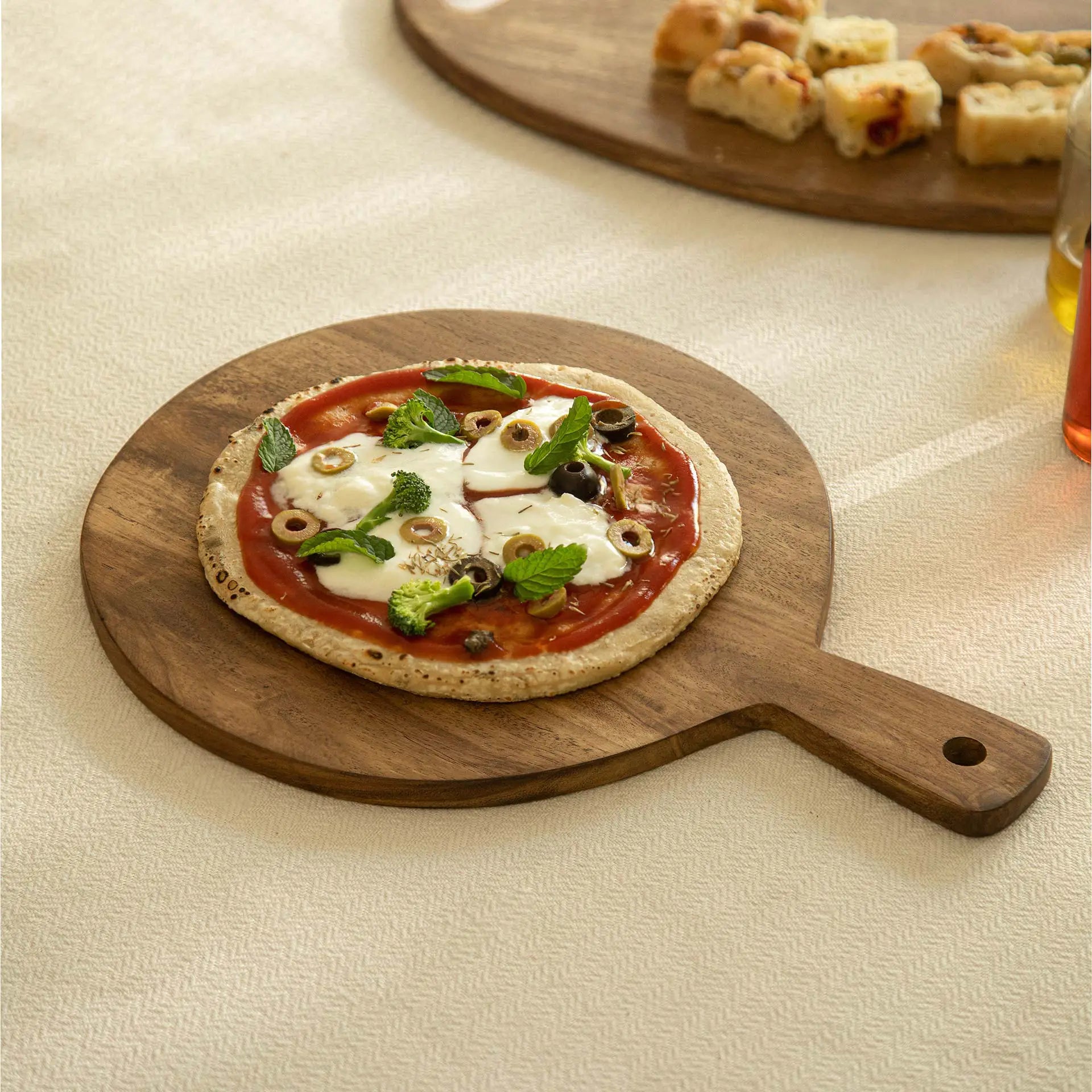
The reason a well-made charcuterie board looks so effortlessly styled is not because of expensive ingredients or professional arrangement. It's because a single board acts as a container for the eye. Everything on the board belongs together. Everything outside it is separate. The board creates a visual boundary that makes the whole setup feel curated rather than scattered.
This is exactly what you want for your IPL snack station.
One handcrafted wooden board on your coffee table becomes the centre of gravity for the entire setup. Bowls go on it. Napkins get tucked under it. Everything else, like glasses, the remote, your phone, lives somewhere else. The board is the snack zone. Full stop.
This single principle eliminates 80% of the clutter before you've even decided what snacks to serve.
The 3-Bowl Rule: Simple, Flexible, Foolproof
Once you have your board, the next question is what goes on it. And here's where a lot of people overthink things five bowls, six snacks, a cheese platter, some fruit, maybe some sandwiches...
Stop. You need three bowls. That's it.
Bowl 1—The Dry Bowl (Your Biggest Bowl)
This is your workhorse. Roasted peanuts, bhujia, multigrain chips, popcorn, roasted chana or whatever your crowd loves. The key is dry, room-temperature-stable, and easy to grab by the handful. This bowl will need refilling most often, so make it the largest of the three.
Bowl 2—The Dip Bowl (Your Medium Bowl)
A cold dip transforms a dry snack station into a proper spread. Hummus with a drizzle of olive oil, a herbed curd dip, green chutney, salsa—pick one or let guests choose between two if you have the bowl space. The dip bowl adds colour contrast and makes even plain chips feel intentional.
Bowl 3—The Fresh Bowl (Your Smallest Bowl)
This is your palate cleanser and your sweet finish rolled into one. Sliced mango, grapes, a handful of dates, a few squares of dark chocolate, mini ladoos if you're feeling festive. Something that gives people a break from the salt. This bowl also photographs beautifully, which is a completely legitimate reason to include it.
Three bowls, three categories, one board. Arrange them in a loose triangle; odd-number groupings always look more natural and less corporate than straight lines, and there you have a snack station that looks styled without trying.
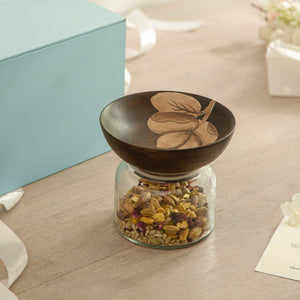
The handcrafted ceramic bowls from ellementry are particularly well-suited for this setup. Their natural, slightly irregular finishes mean no two bowls look identical, which gives the board an organic, collected-over-time quality rather than a matched-set uniformity. That's the difference between a table that looks lived-in and one that looks like a showroom.
Building Your IPL Snack Station: The Full Setup
Here's how to put it all together from start to finish in under 15 minutes.
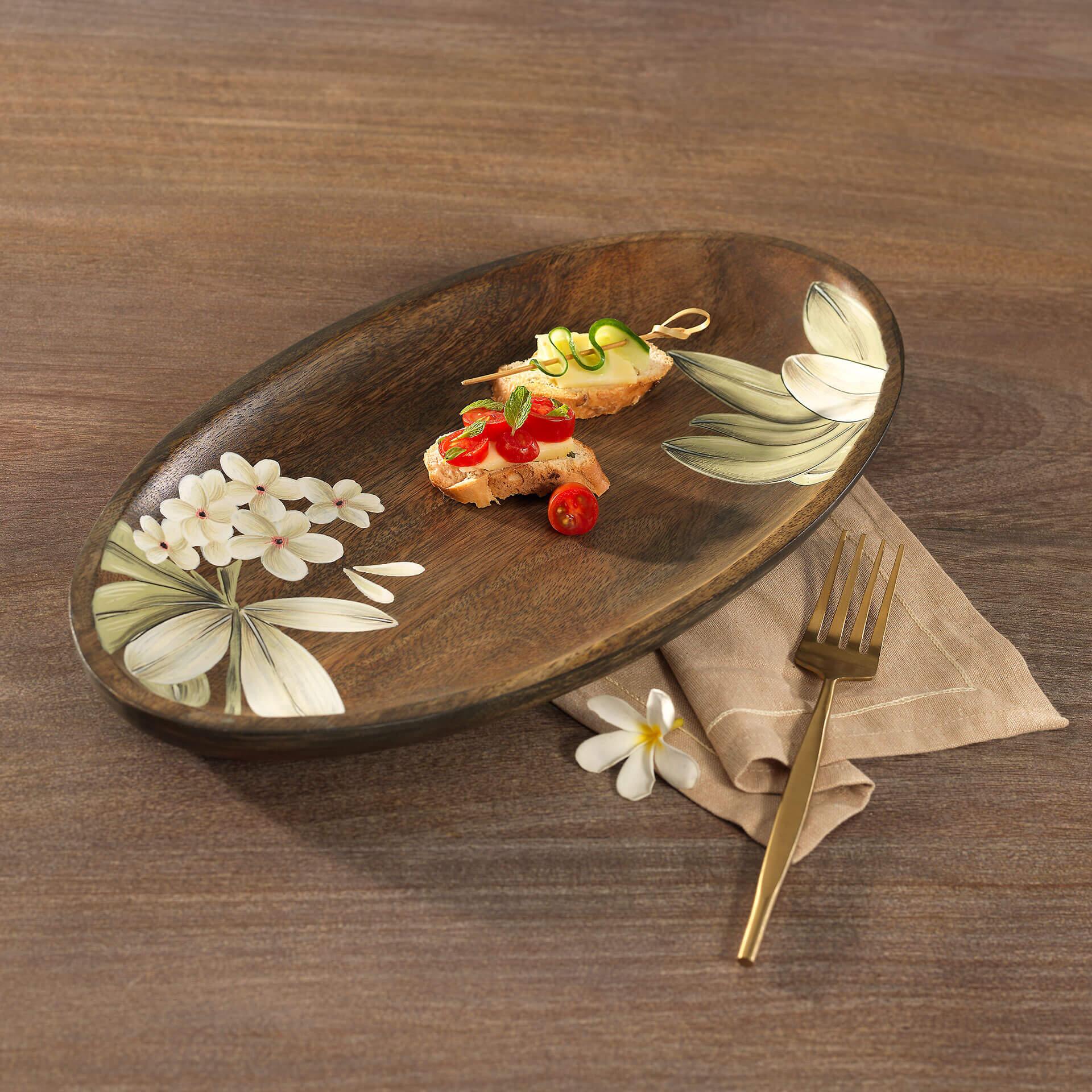
Start with the board.
Place your cheese and bread board at the centre of your coffee table or snack counter, whichever is closest to where people will be sitting. If you have a large group, two boards side by side work better than one overloaded board. Give it some breathing room & don't push it to the edge.
Set the bowls before the snacks go in.
This sounds minor but it matters. Arrange your three empty ceramic bowls first so you can see how they sit together. Adjust spacing. Make sure the largest bowl isn't crowding the others. Once you're happy with the layout, then fill them. Filling first and arranging after leads to spills and asymmetry.
Keep beverages off the board entirely.
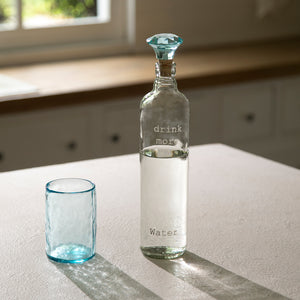
This is non-negotiable for a clutter-free setup. Glasses on the snack board are how condensation rings and tipped drinks happen. Use a serving tray placed beside or behind the main board as your dedicated drinks zone. A ceramic jug of nimbu paani or jaljeera on the tray, tumblers arranged around it & that's your beverage station. Completely separate, completely intentional.
Handle hot snacks differently.
If you're planning to bring out paneer tikka, toast, sliders, or anything warm, don't put it on the main snack board. Place a wooden chopping board off to one side, near the kitchen end of the room if possible, as your hot snack landing zone. This way the main board stays tidy and the hot food gets its own moment rather than being crammed in between the peanut bowl and the dip.
The finishing touch: a condiment set If your crowd is the kind that wants extra chutney, achaar, or sauce alongside their snacks, a small ceramic condiment set placed at the edge of the board handles this without adding visual noise. Tiny, contained, purposeful. No more half-open sauce bottles standing directly on the table.
What to Actually Serve: A Match-Day Snack Guide
The best IPL snacks share a few characteristics. They're easy to eat without looking away from the screen, they don't require plates or cutlery, and they don't go soggy after 20 minutes on a table.
Here's a practical breakdown:
|
Bowl |
Category |
Best Options |
|
The Large Bowl |
Dry & Crunchy |
Roasted peanuts, bhujia, baked chips, popcorn, roasted makhana |
|
The Medium Bowl |
Dip or Sauce |
Hummus, herbed curd dip, green chutney, chipotle salsa |
|
The Small Bowl |
Fresh or Sweet |
Sliced mango, grapes, melon cubes, dates, dark chocolate, mini ladoos |
A few things worth avoiding: anything that needs to be eaten hot (it won't stay that way), anything with strong odours that linger, and anything that crumbles or leaves residue on hands. The goal is snacks that let people focus on cricket, not on managing their food.
3 IPL Snack Station Styles for Different Homes
Not every home has the same aesthetic, and your snack station should feel like it belongs in yours. Here are three interpretations of the same system for three different home styles.
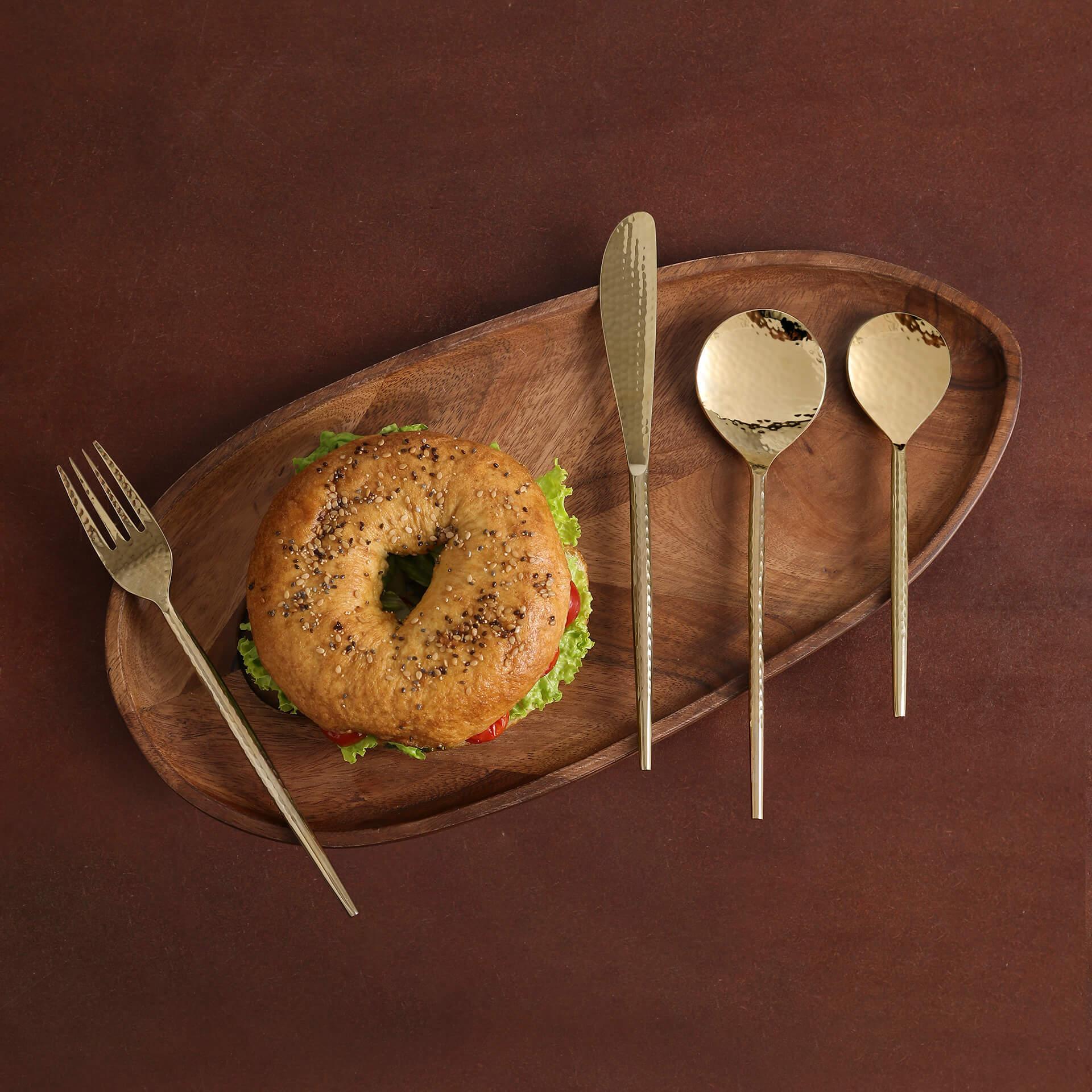
The Minimalist Setup
If your home leans clean and contemporary, with white walls, concrete surfaces, neutral tones, then lean into it fully. One large wooden board in a pale, light-toned wood, three matte white ceramic bowls in slightly varying sizes, a slim glass or ceramic water jug & no napkins on the board just fold them into a small stack beside it, or slip them underneath.
The entire setup should feel like it was barely touched. The restraint is the point. When guests walk in and see it, the reaction you're going for is "Oh, that's nice” & not "Woah, you really went all out."
The Warm Rustic Setup
For homes with warmer tones as in wooden furniture, terracotta accents, earthy textiles—go deeper and richer with your choices. A darker acacia or mango wood board. Ceramic bowls in terracotta or warm off-white tones. A clay water bottle from ellementry on the side tray rather than glass. This setup should feel like it evolved naturally from your home's existing character, not like it was styled on top of it.
The warm rustic approach is particularly good for evening matches when the lights are low and the warm tones glow. It feels cosy and unhurried exactly the right energy for cricket on a weeknight.
The Practical Party Setup
When you're hosting eight or more people, the three-bowl-one-board system simply needs to scale, not change. Two boards side by side rather than one. Five or six bowls instead of three, but still grouped by category. A larger serving tray for drinks, possibly two trays if your group is big. A condiment set becomes essential here rather than optional because you'll have more varied tastes to accommodate.
The key to keeping a larger setup from looking chaotic is to maintain the zone logic: snacks on the boards, drinks on trays, empties in a designated spot. More volume, same system. It scales cleanly.
The Habits That Keep It Clutter-Free All Match Long
Setting up well is half the battle. The other half is maintaining it through a three-hour T20 match when everyone's distracted and the cricket is genuinely tense.
Set up 30 minutes before the toss, not during it.
The biggest mistake is trying to set things up while the match has already started. Prep your entire station — filled bowls, drinks tray, extra snacks in the kitchen — before a single ball is bowled. Mid-match refilling works if you're swapping a bowl from a pre-prepared backup in the kitchen. It doesn't work if you're chopping, decanting, and searching for serving spoons during a wicket.
Pre-decant everything before guests arrive
No chip packets on the table. No namkeen dabba sitting open beside the board. Everything goes into bowls before the doorbell rings. This single habit is responsible for at least 60% of a snack station's visual tidiness. The packets and boxes stay in the kitchen as your refill stock.
Designate an empty zone
Place a small tray near the entrance of the room or near the kitchen door specifically for used glasses, plates, and empty bowls. When it's visible and accessible, guests naturally use it. When it doesn't exist, used items land on the snack board and the table and everywhere else.
Refill at innings break, not on demand
Resist the urge to top up individual bowls the moment they start looking low. Wait for the innings break, take the board to the kitchen, refill everything at once, and bring it back. One focused refill beats five half-hearted ones that each leave the table slightly more disordered than before.
Frequently Asked Questions
How do I build a clutter-free IPL snack station at home?
Place 3 ceramic bowls on one wooden board fill them with nuts, a dip, and fruits. Keep a separate tray for drinks. Set it up 30 minutes before the match. That's the entire formula.
What snacks work best for an IPL snack board?
Roasted nuts, bhujia, sliced fruits, hummus or chutney for dipping, and small sweet bites like dates or chocolate. Avoid anything that requires cutlery or goes cold quickly—keep it finger-food friendly so people can eat without looking away from the screen.
What type of board is best for a snack station?
A flat wooden cheese or bread board works best. It's sturdy, visually warm, and large enough to hold 3 bowls comfortably. Acacia and mango wood are particularly beautiful and durable for repeated use.
How many bowls should I use for an IPL snack board?
Three ceramic bowls is the sweet spot for most setups one for dry snacks, one for a dip, and one for fresh or sweet bites. It covers enough variety without overwhelming the board visually or making refilling complicated.
Where can I buy handcrafted snack boards and ceramic bowls in India?
Ellementry offers a complete range of handcrafted wooden boards, ceramic bowls, serving trays, and tumblers, all made for homes that value both function and beauty. Free delivery on orders above ₹1,000.
Your cricket is better when your table isn't fighting you for attention.

